
Open a Bitcoin wallet app, and you'll see a balance sitting there, looking exactly like a bank account. It's easy to assume your Bitcoin is "in" that app, the same way cash sits in a physical wallet. But that's not actually what's happening — and understanding the difference is one of the most important things you can learn as a Bitcoin owner.
The Short Answer: Your Wallet Controls Bitcoin Recorded on the Blockchain

Bitcoin isn't stored inside your phone, wallet app, or hardware wallet the way files are stored on a hard drive. Instead, Bitcoin ownership is represented by unspent transaction outputs, or UTXOs, recorded in Bitcoin's public transaction history. Each spendable output contains a certain amount of bitcoin and a set of conditions that must be satisfied before that bitcoin can be spent.
Your wallet identifies the outputs it can control and displays their combined value as a familiar-looking balance. So when a wallet shows "0.05 BTC," it is giving you a convenient summary of the bitcoin that its keys are currently able to spend rather than showing coins physically stored inside the application.
What a Bitcoin Wallet Actually Stores
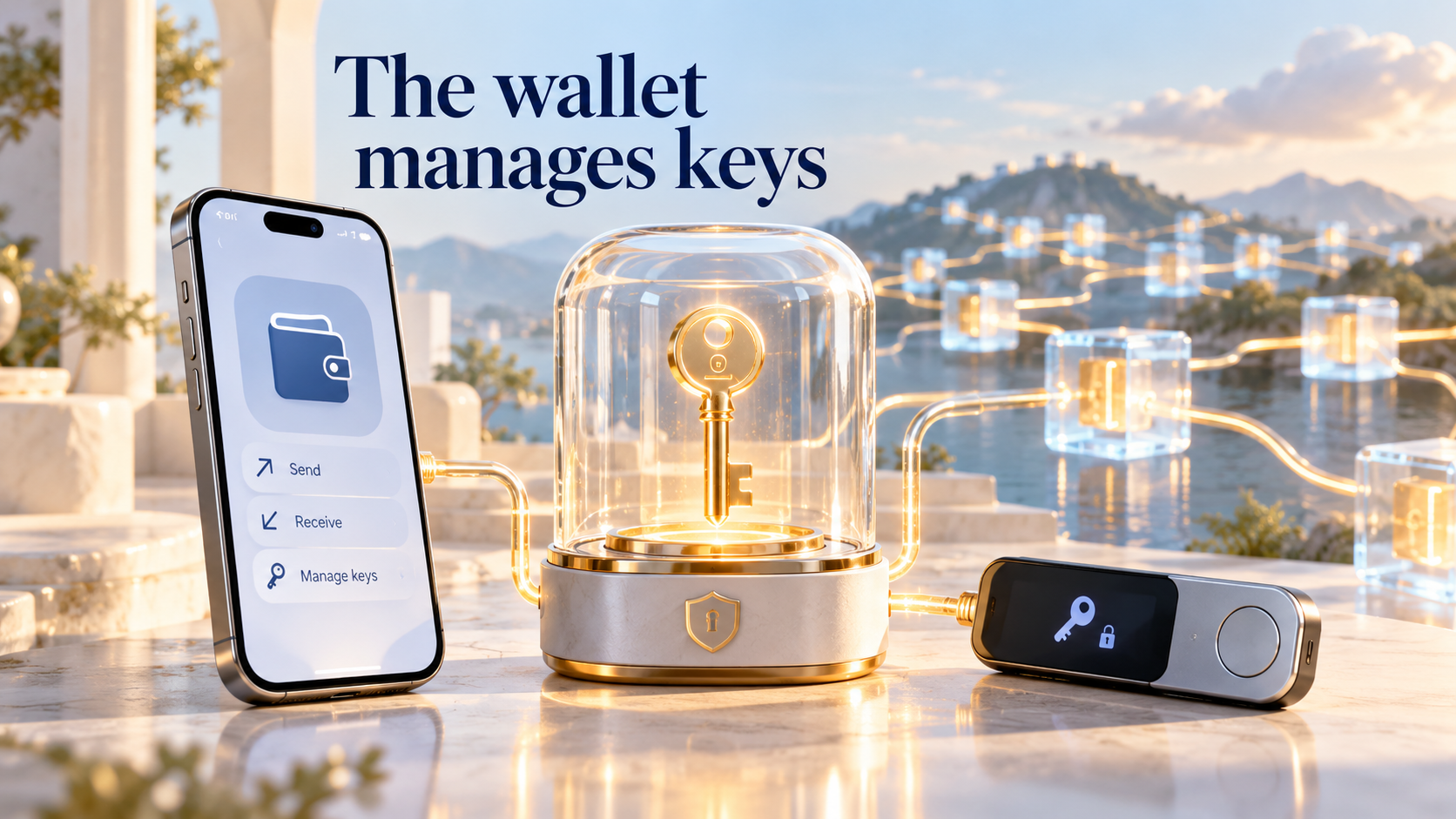
A Bitcoin wallet's main job is to manage cryptographic keys and the information needed to find and spend the bitcoin controlled by those keys.
Modern wallets typically manage multiple private keys, public keys, and receiving addresses. Many wallets derive those keys from a single recovery seed, which is why one recovery phrase can often restore an entire wallet rather than just one address.
A private key is the secret information used to produce the cryptographic signatures required to spend bitcoin. A Bitcoin address, by contrast, is information you can give someone when you want to receive a payment. It is better to think of the wallet as a key manager and transaction tool rather than as a container holding digital coins.
When you send Bitcoin, your wallet creates a transaction that spends one or more existing UTXOs and creates new outputs. It signs the required inputs with the appropriate keys and broadcasts the transaction to the network. The bitcoin is therefore not physically moving out of your phone and into somebody else's phone — the blockchain is recording a new set of spendable transaction outputs.
If you permanently lose the private keys and every valid backup or recovery method for a self-custodied wallet, the corresponding bitcoin remains recorded on the blockchain but may become permanently unspendable by you.
Custodial vs. Non-Custodial Storage: "Not Your Keys, Not Your Coins"

This is one of the most important distinctions in Bitcoin storage.
Custodial storage means a third party, such as an exchange, controls the private keys associated with the bitcoin it holds for customers. Your account balance is therefore a claim recorded in the custodian's internal system, and you rely on that company to secure the underlying bitcoin and honor withdrawals.
Non-custodial storage, or self-custody, means you control the keys needed to spend your bitcoin yourself. This removes the custodian from the transaction path but also makes you responsible for securing the wallet, recovery information, and backups.
Some custodial companies publish forms of proof of reserves or other financial disclosures intended to provide information about assets they hold. That should not be confused with proving control of an individual self-custodied wallet.
For people who need formal documentation of a self-custodied cryptocurrency position, OneMiners' Crypto Proof of Holdings Certificate takes a different approach: it documents blockchain holdings for a specified address and can include proof that the applicant controls that wallet. OneMiners explicitly states that the service does not verify assets held inside an exchange account and is not an audit or assurance engagement.
Types of Wallets: Hot vs. Cold Storage

Once you choose self-custody, another important question is how the private keys are stored.
- Hot wallets operate on internet-connected devices such as smartphones or computers. They are convenient for regular transactions but have greater exposure to online threats such as malware and phishing.
- Cold wallets keep the private keys offline or isolated from an internet-connected environment. Hardware wallets are a common example: the device can communicate with a computer or phone to review and sign transactions while keeping the private keys protected inside the signing device.
Many users separate their funds by purpose, keeping a smaller spending balance in a hot wallet while using cold storage for bitcoin they do not need to access frequently.
How to Keep Your Bitcoin Wallet Secure
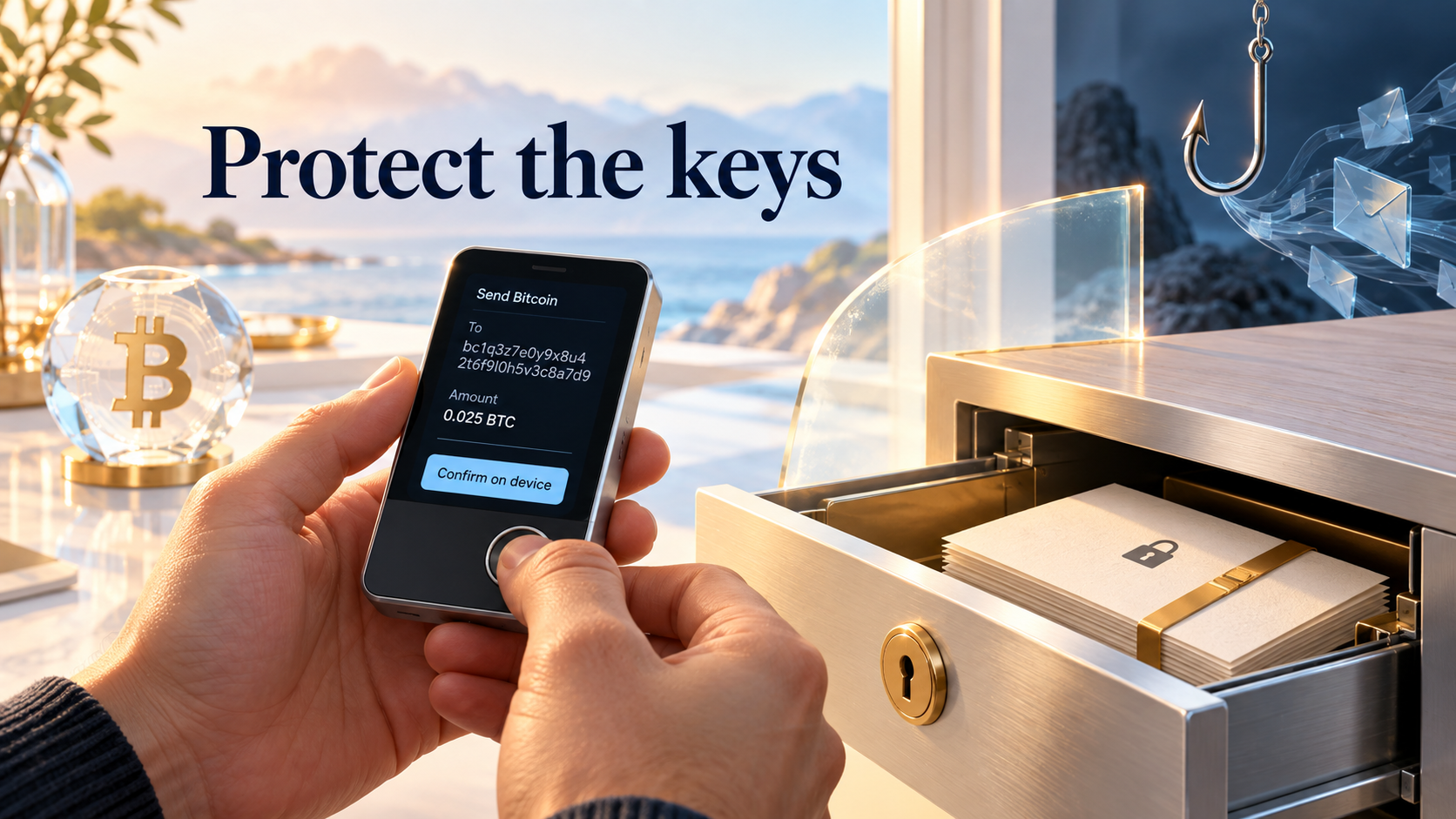
However you choose to hold Bitcoin, security depends on protecting the keys and recovery information that control your funds.
- Back up your recovery information securely offline. Anyone who obtains a valid recovery phrase may be able to restore the corresponding wallet, so it should never be casually shared or stored in an exposed cloud account.
- Consider dedicated signing hardware for larger long-term balances. Keeping private keys isolated from a general-purpose internet-connected computer can reduce exposure to remote malware.
- Verify transaction details before signing. Check the destination address and amount carefully, especially when copying addresses or using unfamiliar software.
- Treat unexpected requests for a seed phrase or private key as a major warning sign. Legitimate support staff should not need your recovery phrase to troubleshoot a wallet.
The objective is not simply to keep a device safe. It is to make sure an attacker cannot obtain the credentials or authorization needed to spend your bitcoin.
What Happens to Bitcoin Earned Through Mining?
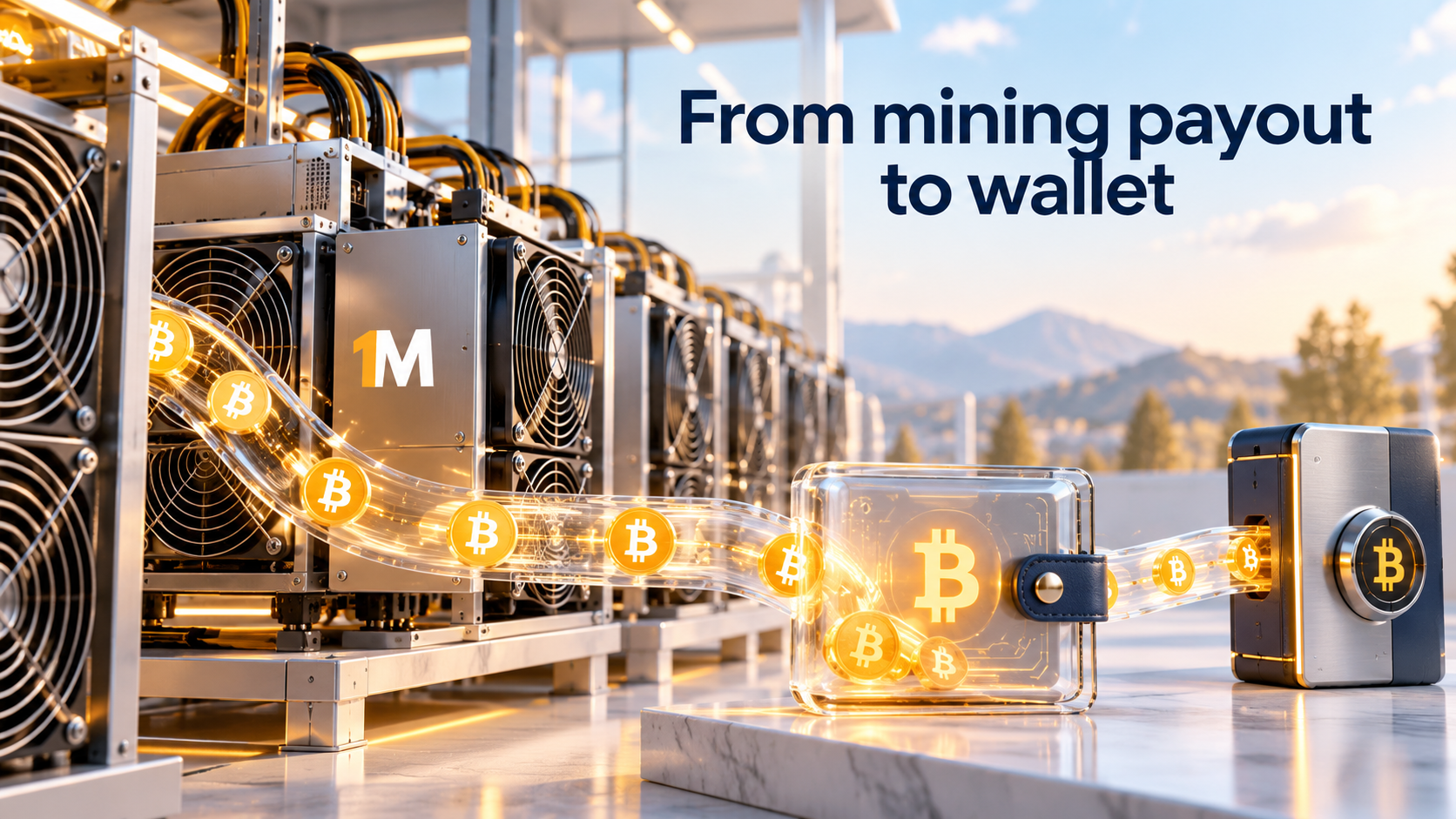
The same storage principles apply to Bitcoin earned through mining. A mining pool can pay a miner's share of rewards to a Bitcoin address supplied by the miner, after which control of that bitcoin depends on who controls the keys associated with the resulting spendable outputs.
A miner might send payouts to a self-custodied wallet, use a dedicated wallet for operating revenue, or periodically move accumulated bitcoin into cold storage. Larger mining operations may use more sophisticated arrangements such as multisignature wallets and separated operational and treasury wallets.
If you're exploring where mined Bitcoin comes from in the first place, OneMiners' step-by-step guide to how Bitcoin mining works explains how blocks, mining rewards, and transaction fees fit together. For broader mining-hardware and operational reading, Cassys' Medium writing provides additional related material.
Common Misconceptions About Bitcoin Storage
"My Bitcoin is stored inside my phone's wallet app." Not quite. Your phone stores the keys that let you control your Bitcoin — the Bitcoin itself is an entry on the blockchain, accessible from any device that has those same keys.
"If I delete the app, my Bitcoin disappears." Deleting an app doesn't delete your Bitcoin from the blockchain. As long as you still have your private key or seed phrase backed up elsewhere, you can restore access using a different wallet.
"Keeping Bitcoin on an exchange is the same as holding it myself." It isn't. On an exchange, the exchange holds the private keys, not you. You're trusting them to manage those keys correctly and to let you withdraw whenever you choose — which is exactly why "not your keys, not your coins" has become such a common phrase in the Bitcoin community.
"Cold storage means my Bitcoin is physically stored on the device." A cold wallet stores your private keys offline — it still doesn't contain the Bitcoin itself. The blockchain remains the single source of truth no matter what device or method you use to hold your keys.
Frequently Asked Questions
If Bitcoin isn't stored in my wallet, what does my wallet balance actually show? Your wallet tracks the spendable Bitcoin outputs controlled by its keys and adds their values together to display a convenient balance. A modern wallet may manage many addresses and many UTXOs, so the number you see is usually a wallet-level summary rather than the balance of one single blockchain account.
Is it safer to keep Bitcoin on an exchange or in my own wallet? Self-custody removes reliance on a third party but places full responsibility for key security on you. Exchange custody is more convenient but requires trusting that platform's security and solvency. Many people use a mix of both depending on the amount involved.
What happens if I lose my hardware wallet? In a typical single-signature wallet, you can usually restore access on a compatible wallet using the recovery phrase or other backup created during setup. The physical hardware device itself is replaceable; the critical part is preserving the recovery information needed to reconstruct the wallet's keys. More advanced setups such as multisignature wallets can require additional backup information.
Can someone steal my Bitcoin without my private key? To spend Bitcoin, a transaction must satisfy the spending conditions attached to the relevant UTXOs. In a typical single-signature wallet, that requires a valid signature produced with the correct private key. In practice, attackers usually try to obtain keys, recovery phrases, wallet access, or valid signatures rather than breaking Bitcoin's underlying cryptography directly.
Do I need a hardware wallet to use Bitcoin safely? Not necessarily for small amounts, but it's widely recommended for anyone holding a significant amount long-term, given how much it reduces exposure to online attacks.
Final Thoughts
Bitcoin doesn't sit inside your phone, laptop, or hardware wallet the way a file sits on a storage device. Bitcoin's transaction history records spendable outputs on a distributed ledger, while your wallet manages the cryptographic keys and other information needed to identify and spend the outputs you control. Once that distinction clicks, questions about custodial versus self-custody and hot versus cold wallets become easier to understand. The key question is no longer simply “where is my Bitcoin?” but “who controls the credentials required to spend it?”