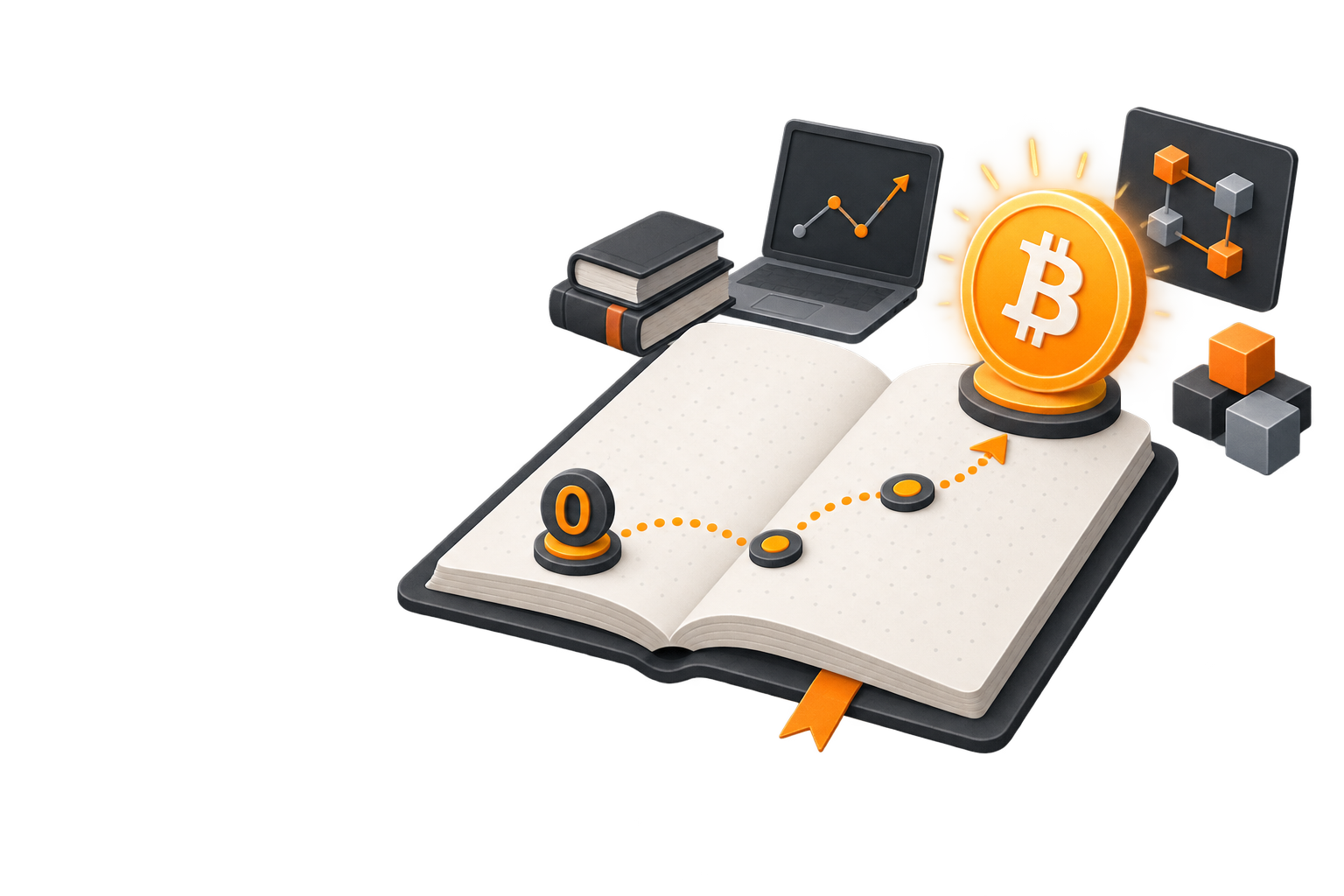
Bitcoin is a digital money system that anyone can use without a bank running the network. It records ownership on a shared public ledger and lets people send value directly to one another.
Why money needs trust, rules, and a way to prevent the same funds being spent twice.
How Bitcoin differs from a company-issued app balance or a bank account.
Why its fixed issuance schedule and open network matter to many users.
Bitcoin is a network and a monetary system—not just a coin on a screen.
02 / Bitcoin 101
How It Works
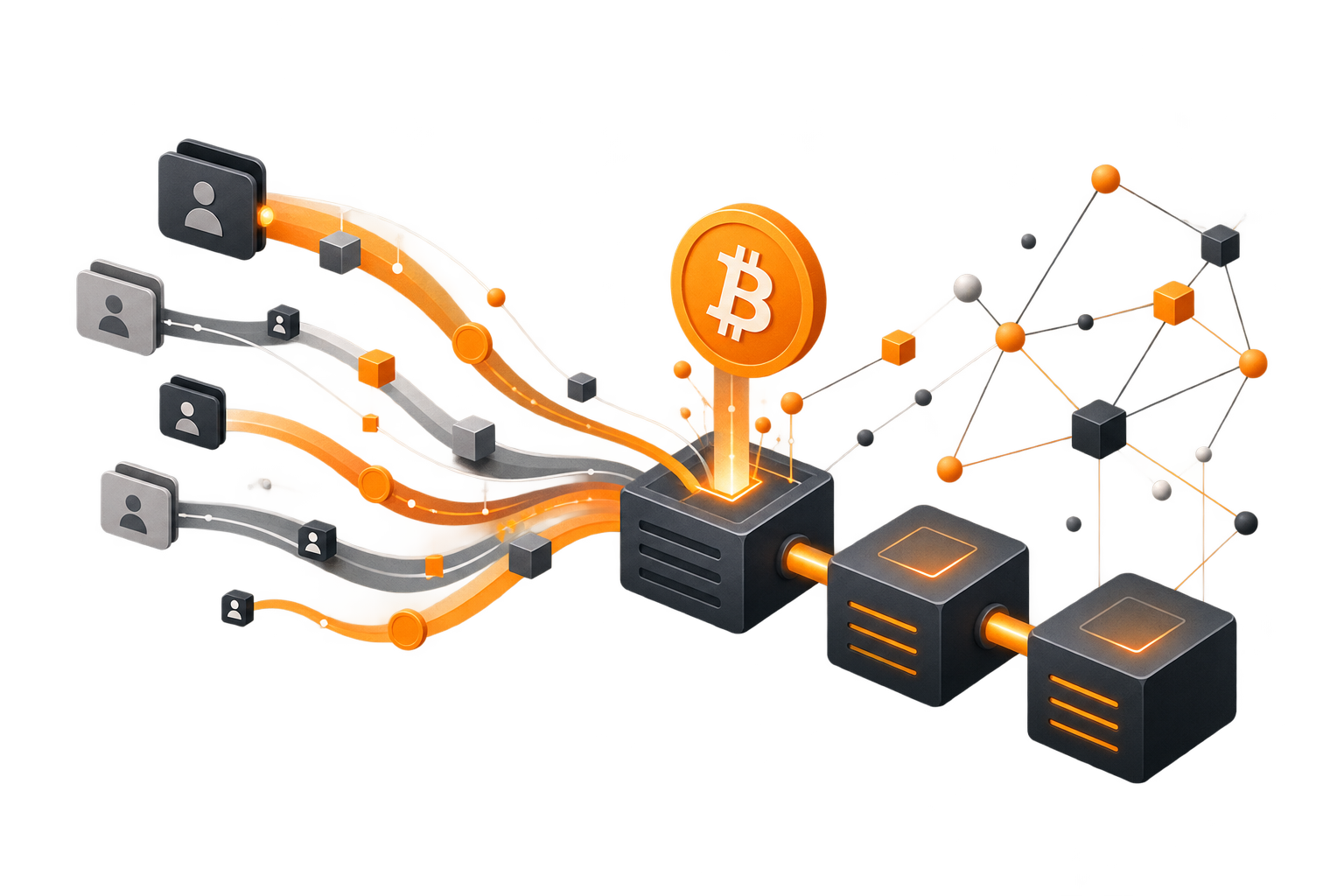
When you make a Bitcoin payment, the network checks it against shared rules. Valid transactions are grouped into blocks, and each new block builds on the history before it.
What transactions, addresses, blocks, and confirmations mean in everyday language.
How independent nodes verify the same rules instead of relying on one central database.
Why a public ledger can be auditable without publishing a person's name by default.
The blockchain is a shared record that the network continually checks and extends.
03 / Bitcoin 101
Use Bitcoin
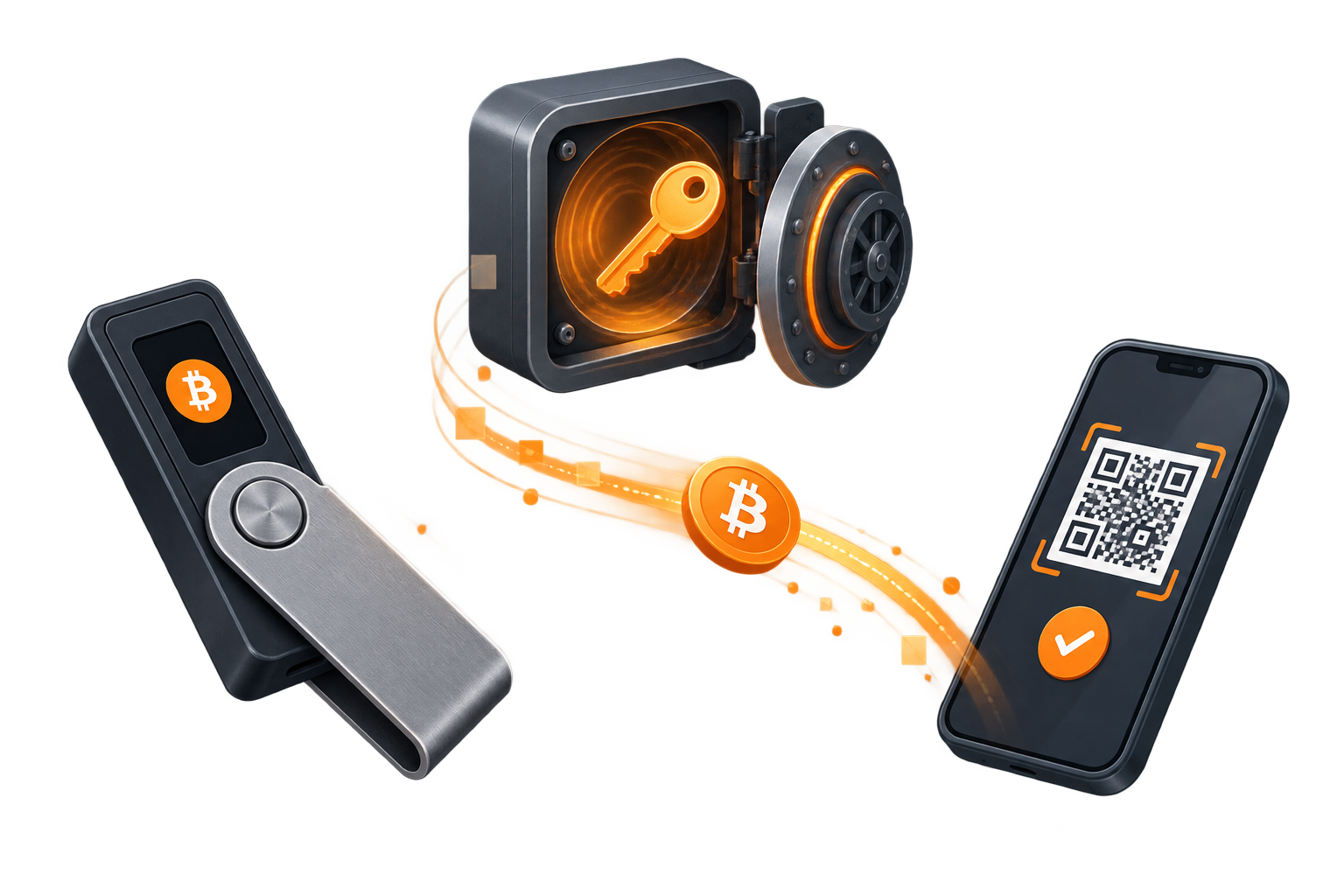
A wallet helps you manage the keys that authorize bitcoin payments. The important part is not the app or device itself—it is protecting the secret recovery information that controls access.
The difference between holding keys yourself and relying on a third-party custodian.
How receiving, sending, fees, and confirmations affect a payment.
How to make a backup plan before storing more value than you can afford to lose.
Never share a recovery phrase or private key; legitimate support will not ask for it.
04 / Bitcoin 101
Mining Basics
Mining is the competitive process that adds blocks to Bitcoin's history. It uses proof of work to make changing that history costly and to give the network a way to agree on transaction order.
Why miners use specialized ASIC hardware and compete with computational work.
How a block reward and transaction fees help fund network security.
Why mining profitability depends on changing conditions such as energy cost and difficulty.
Mining secures the network; it is not a shortcut to guaranteed income.
05 / Bitcoin 101
Invest & Grow
Bitcoin's price can move sharply in either direction. Learning the risks, choosing a custody approach deliberately, and avoiding urgency are more useful foundations than following predictions.
How volatility, counterparty risk, security risk, and tax obligations can affect decisions.
Why research, position sizing, and a written plan can help avoid emotional decisions.
How to distinguish education from promises, hype, or personalized financial advice.
This is education, not investment advice. Never risk money you cannot afford to lose.
06 / Bitcoin 101
Stay Ahead
Bitcoin keeps changing around the edges: software improves, policy evolves, and market narratives come and go. A good learning habit is to check claims against primary sources and stay curious.
How to read headlines with context instead of reacting to every price move.
Why software releases, privacy practices, regulation, and network adoption deserve separate attention.
Where to continue with explainers, current guides, and carefully sourced updates.
Stay informed, but keep a long view and verify important claims before acting.
A security-first foundation
Pause before you send, share, or invest.
Keep recovery phrases offline and private, verify every payment detail, and treat unsolicited messages, guaranteed returns, and urgent requests as warning signs.
Bitcoin is a decentralized digital money network. It lets participants send value and verify ownership using shared rules rather than a central operator.
What does a Bitcoin wallet do?
A wallet manages the private keys or recovery information used to authorize transactions. It does not hold coins in the same physical way a leather wallet holds cash.
Can a Bitcoin payment be reversed?
No. Bitcoin payments are generally irreversible once confirmed, so check the recipient, amount, and fee before you approve a transaction.
Is Bitcoin mining an easy way to make money?
No. Mining uses specialized equipment, electricity, and operational knowledge. Returns can change quickly and are never guaranteed.
Keep learning
One clear question at a time.
Explore explainers, practical guides, and current Bitcoin updates when you are ready to go deeper.