What Is a Satoshi?
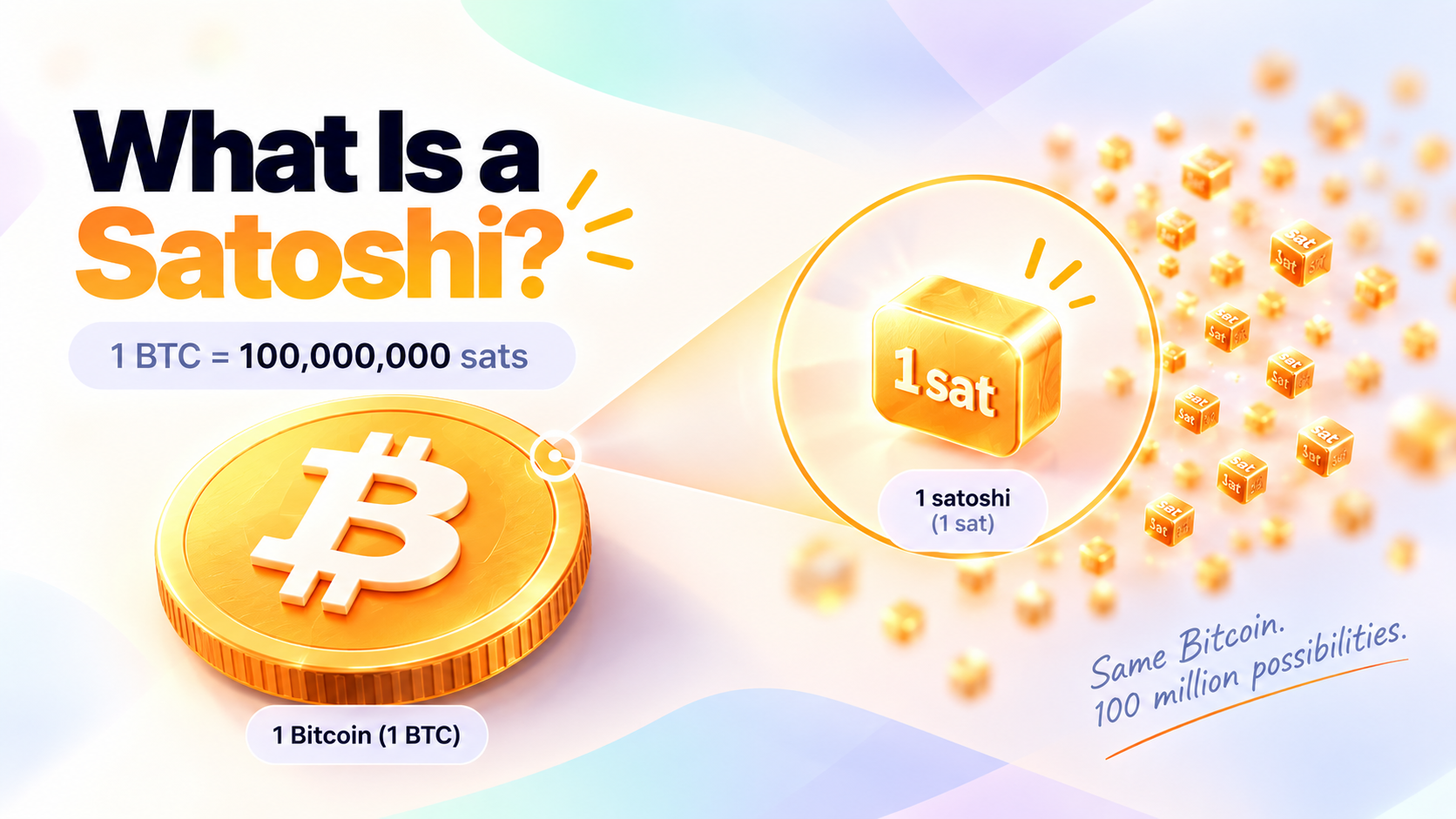
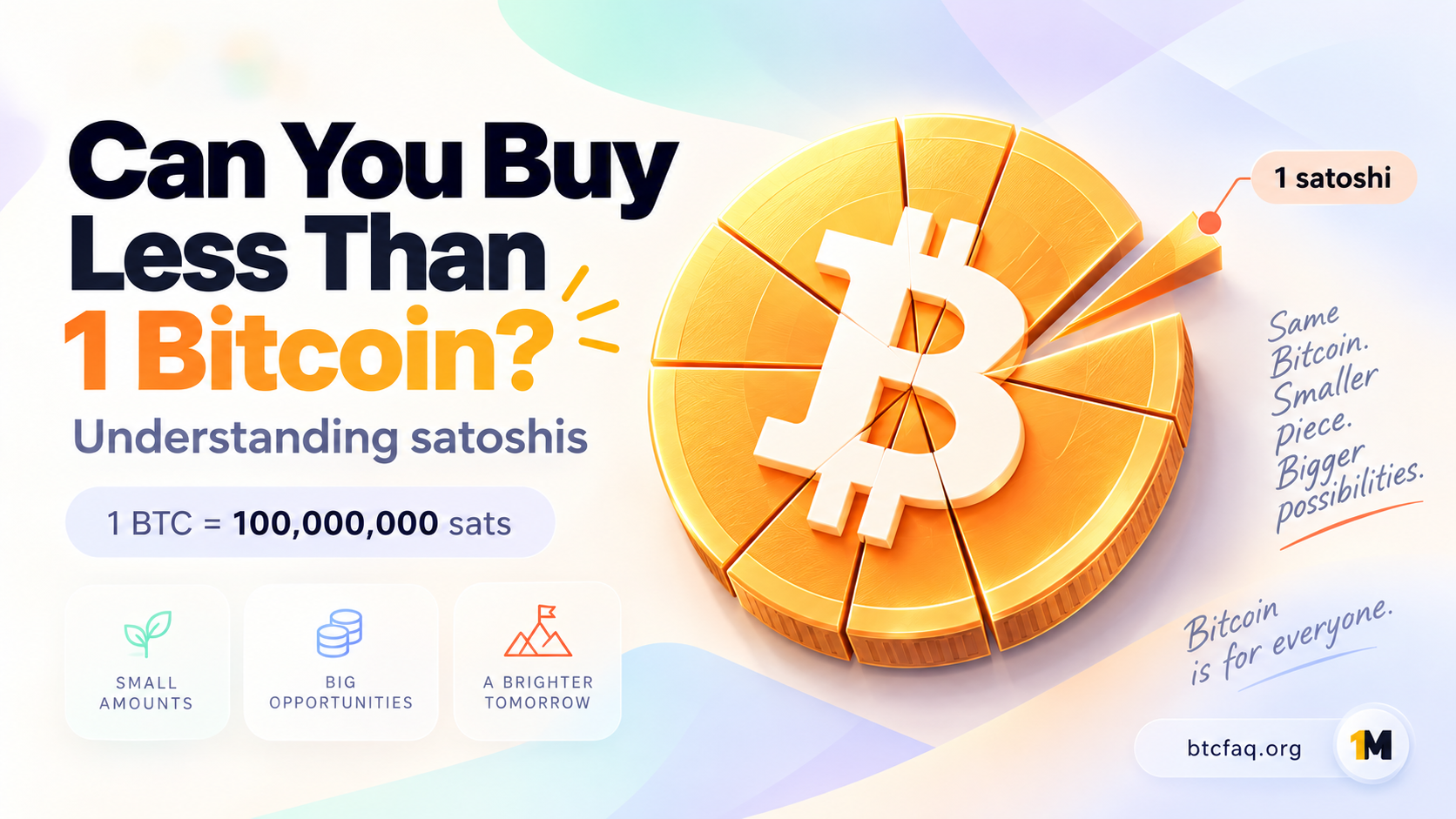
A satoshi (often shortened to "sat") is the smallest unit of Bitcoin, named after Bitcoin's pseudonymous creator, Satoshi Nakamoto. One Bitcoin is divisible into 100,000,000 satoshis — meaning a single sat is worth one hundred-millionth of a Bitcoin.
To put that in perspective: if Bitcoin is trading at $80,000, a single satoshi is worth roughly $0.0008. You'd need 1,250 satoshis just to equal about a dollar at that price. This is why you'll increasingly see prices, tips, and small transactions denominated directly in sats rather than in fractions of BTC — it's simply a more intuitive unit to work with at everyday scales.
For an official definition straight from the source, Bitcoin.org's vocabulary page lists the satoshi alongside other core Bitcoin terminology, and both Kraken's explainer on satoshis and Coinbase's glossary entry for satoshi cover the concept from an exchange's perspective, if you want to see how the term is used across different platforms.
Why Is Bitcoin Divisible This Way?
Bitcoin was designed from the beginning to support very small units of value. On the blockchain, amounts can be represented down to 0.00000001 BTC, or one hundred-millionth of a bitcoin. That smallest on-chain unit later became widely known as a satoshi, or sat, in recognition of Bitcoin's pseudonymous creator, Satoshi Nakamoto. Using discrete base units also allows Bitcoin software to work with integer amounts rather than relying on ordinary floating-point decimal calculations.
Having 100 million base units per BTC gives Bitcoin a high degree of divisibility even if the value of one whole coin rises substantially. On Bitcoin's base layer, one satoshi is currently the smallest unit recorded on the blockchain. Other systems built around Bitcoin can use finer accounting internally — for example, the Lightning Network supports millisatoshis, equal to one-thousandth of a satoshi, even though sub-satoshi amounts cannot be settled directly as individual outputs on Bitcoin's blockchain.
So, Can You Really Buy Less Than 1 Bitcoin?
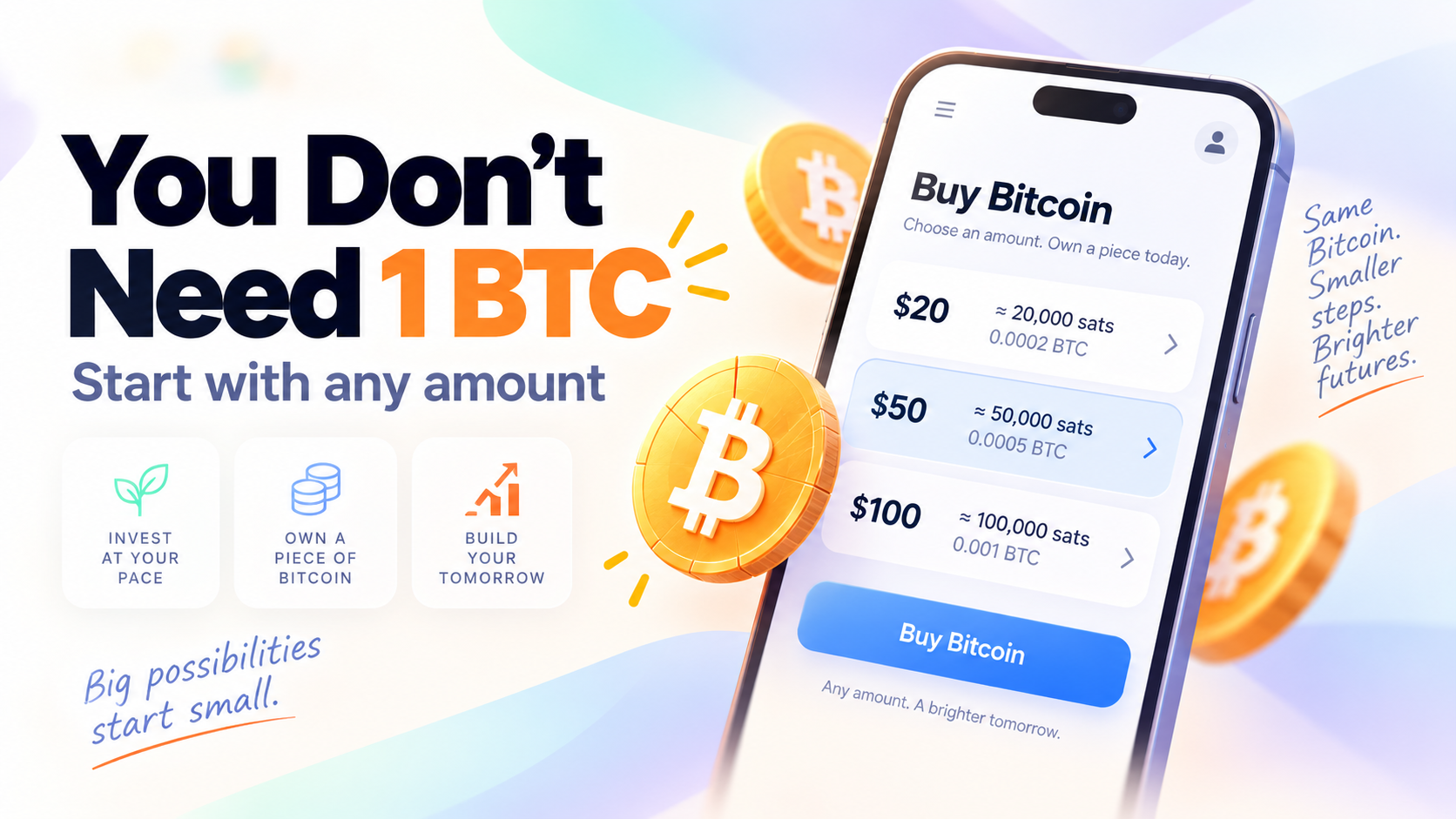
Yes. You are not required to purchase an entire Bitcoin. Many major exchanges and Bitcoin apps allow users to enter an amount in their local currency — for example, $20, $50, or $100 — and purchase the corresponding fraction of BTC at the current market price.
If you spend $50 on Bitcoin, you receive a fractional amount of BTC representing a certain number of satoshis after any applicable trading fees, spreads, or platform charges. Economically and technically, owning a fraction of a Bitcoin does not make it a different type of asset: satoshis are simply smaller units of the same bitcoin.
How to Buy a Fraction of a Bitcoin
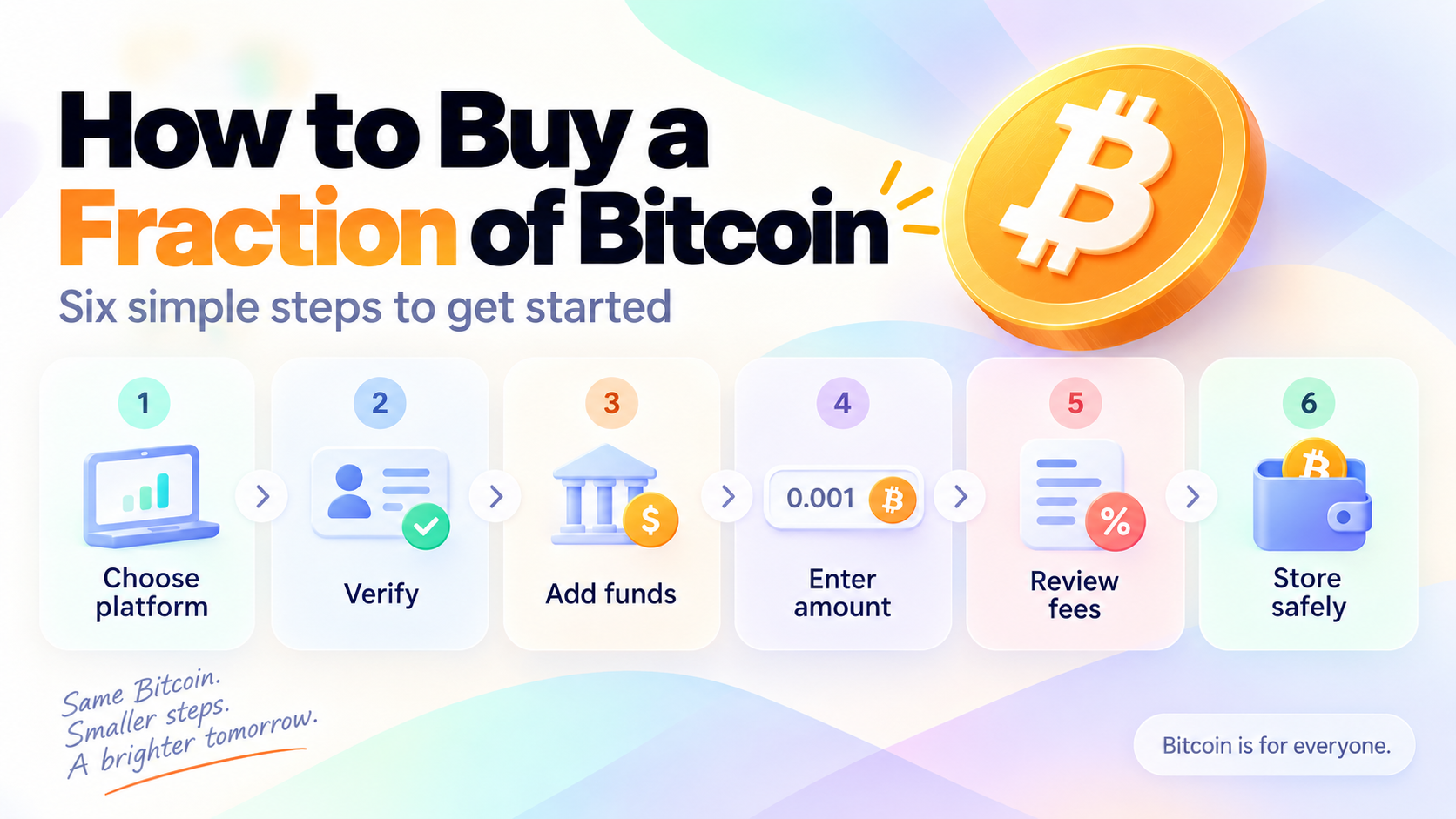
The general process looks similar across many platforms:
- Choose a reputable exchange or Bitcoin app that supports purchases in your local currency.
- Complete identity verification if the platform or local regulations require it.
- Add funds using one of the payment methods supported by the service.
- Enter the amount you want to spend rather than trying to calculate the price of a whole Bitcoin.
- Review the exchange rate and fees, then confirm the purchase. The resulting fractional BTC amount is credited according to the platform's pricing and fee structure.
- Decide where you want to hold it. Some users leave small amounts with an exchange, while others transfer Bitcoin to a wallet where they control the private keys.
Bitcoin itself does not impose a retail purchase minimum such as "$5" or "$10." Those purchase limits are set by exchanges and apps. Very small on-chain transfers can also be impractical because transaction fees and node relay policies affect tiny outputs, so the smallest amount that is practical to buy or withdraw may differ from the smallest unit Bitcoin can technically represent.
Understanding Bitcoin's Units: BTC, mBTC, Bits, and Sats
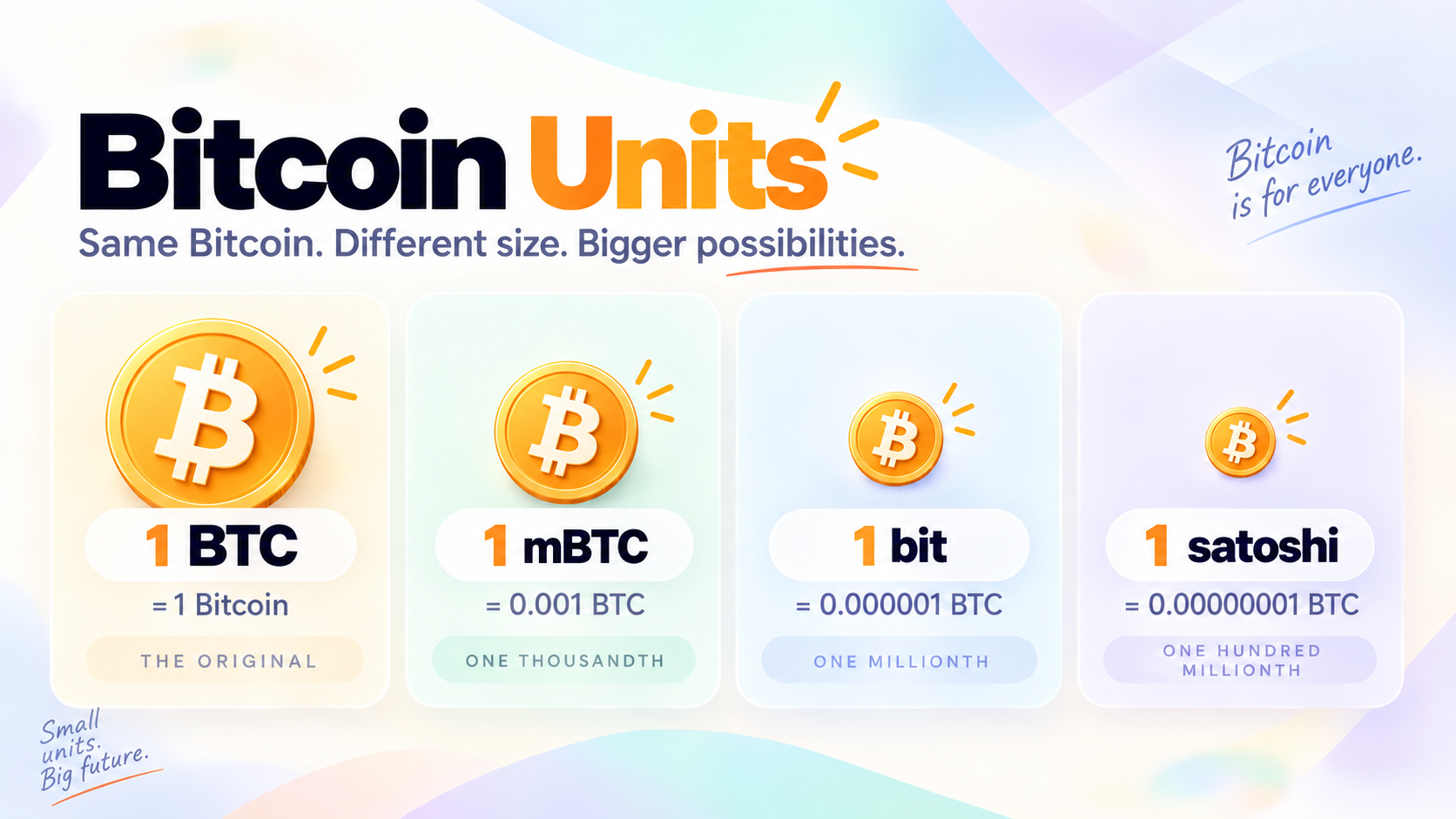
Satoshis aren't the only subunit you might come across. Here's how the main denominations break down:
- 1 BTC = 1 whole Bitcoin
- 1 mBTC (millibitcoin) = 0.001 BTC (one-thousandth of a Bitcoin)
- 1 bit = 0.000001 BTC (one-millionth of a Bitcoin) — an older, less commonly used term today
- 1 satoshi (sat) = 0.00000001 BTC — the smallest unit recorded directly on Bitcoin's blockchain
In recent years, the crypto industry has increasingly standardized around quoting amounts directly in satoshis rather than mBTC or bits, largely because "sats" is simpler to say, easier to reason about at small transaction sizes, and doesn't require remembering multiple intermediate units.
Why Thinking in Satoshis Actually Matters
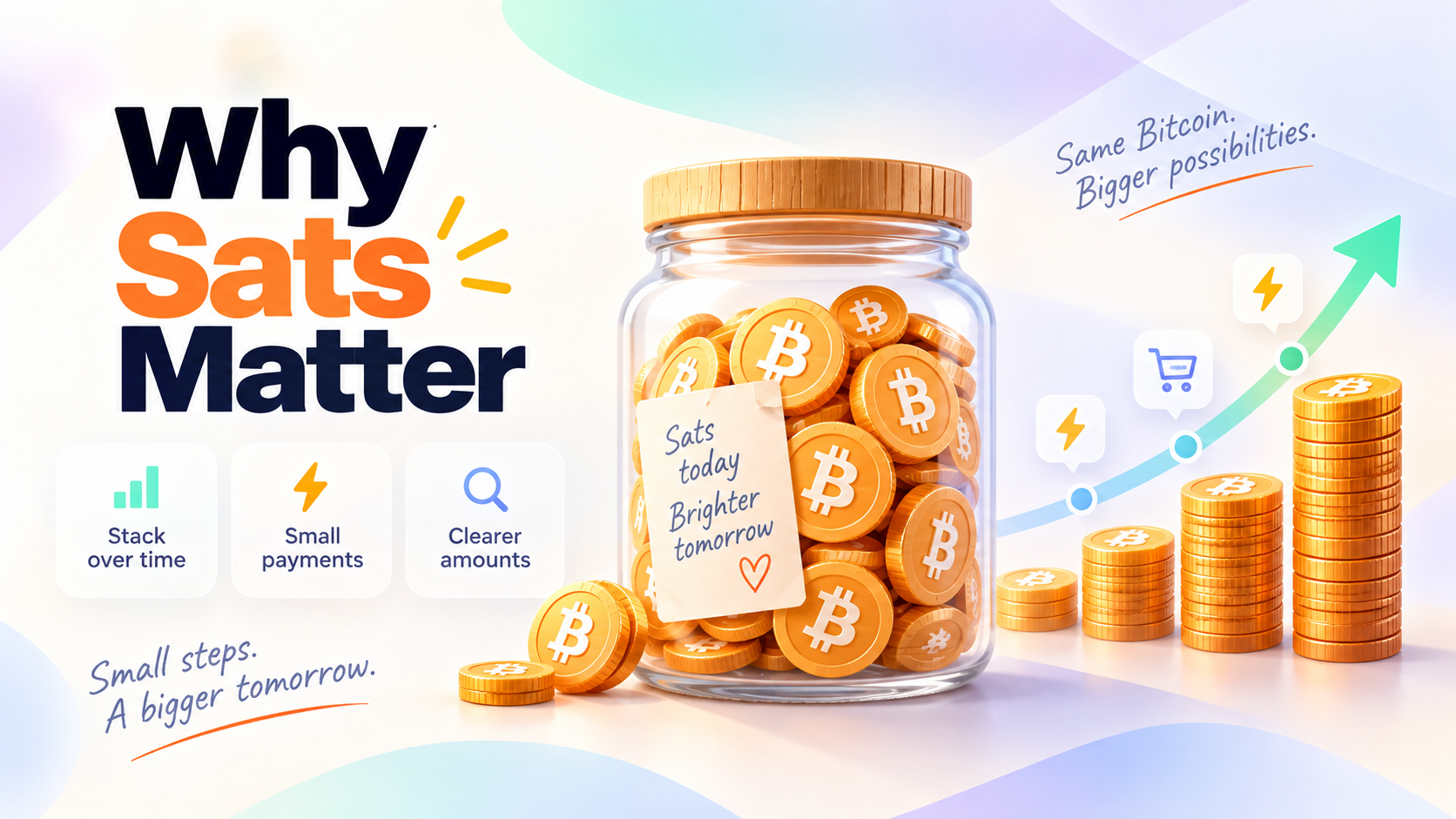
Beyond simple convenience, there are a few practical reasons the satoshi has become the go-to unit for a lot of the Bitcoin community:
- Psychological framing. Watching a Bitcoin balance grow from 10,000 sats to 15,000 sats can feel more tangible and motivating than watching 0.0001 BTC creep toward 0.00015 BTC, even though they represent the exact same value.
- Precision for small payments. Technologies built on top of Bitcoin, such as the Lightning Network, are designed to make small, fast payments more practical. User-facing amounts are commonly shown in sats, while Lightning can use even smaller millisatoshi units internally for payment routing and accounting.
- "Stacking sats." This phrase has become a popular shorthand in the Bitcoin community for gradually accumulating small amounts of Bitcoin over time, regardless of price, rather than trying to buy a whole coin all at once.
Where Do New Satoshis Come From?
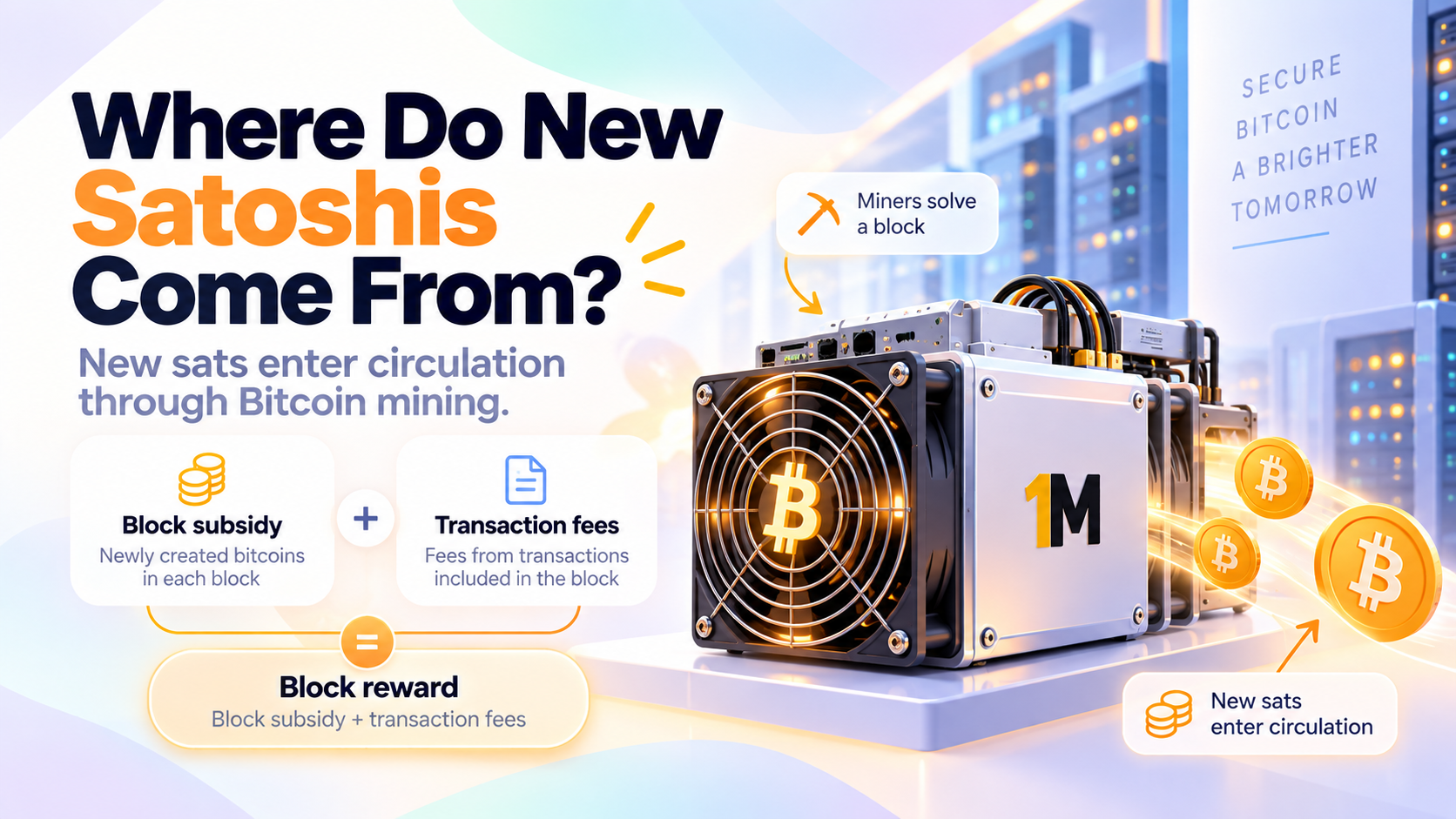
Every newly created satoshi ultimately enters circulation through Bitcoin's block subsidy. When a miner or mining pool produces a valid block, the coinbase transaction can claim newly issued bitcoin through the subsidy as well as the transaction fees paid by transactions included in that block. Together, the subsidy and transaction fees make up the block reward. The important distinction is that only the subsidy creates new bitcoin; transaction fees simply transfer existing bitcoin from users to the miner.
If you're curious about that process in more detail, this step-by-step breakdown of how Bitcoin mining actually works walks through the full mechanics, and Cassys' writing on mining hardware and operations is worth a look if you want to go further into the equipment side of how those rewards get earned.
Common Misconceptions About Buying Bitcoin
"I need to buy a whole coin to actually own Bitcoin." Not true. A fraction of a Bitcoin is the same asset as a whole Bitcoin. Bitcoin amounts are ultimately represented in discrete satoshi units, so holding 10,000 sats simply means controlling a smaller amount of bitcoin than someone controlling 1 BTC.
"Bitcoin's high price makes it inaccessible." The price of one whole Bitcoin doesn't set a minimum entry point. Because of satoshis, you can participate with virtually any amount you're comfortable with.
"Owning a fraction of a Bitcoin is less secure than owning a whole one." The size of the balance does not determine its cryptographic security. Security depends on factors such as who controls the private keys, the wallet and device being used, backup practices, account security, and protection against theft or phishing. Holding 5,000 sats does not inherently use weaker Bitcoin security than holding 5 BTC.
Frequently Asked Questions
How many satoshis are in 1 Bitcoin? There are exactly 100,000,000 satoshis in one Bitcoin.
**What is the smallest amount of Bitcoin I can buy?**Bitcoin itself does not define a retail purchase minimum. Exchanges and apps set their own minimum order sizes, which may be $1, $5, $10, or another amount depending on the service. Withdrawal minimums and network fees can also make very small purchases impractical to move on-chain.
Is a satoshi the smallest unit of Bitcoin? A satoshi is currently the smallest unit recorded directly on Bitcoin's blockchain: 0.00000001 BTC. Systems built on Bitcoin can use smaller accounting units internally — Lightning, for example, uses millisatoshis — but sub-satoshi amounts are ultimately rounded when settled onto Bitcoin's base layer. Bitcoin's rules could also theoretically be changed in the future if greater on-chain divisibility were ever required.
Why is it called a "satoshi"? It's named after Satoshi Nakamoto, the pseudonymous creator of Bitcoin, as a tribute to whoever designed the original protocol.
Do I need to understand satoshis to use Bitcoin? No — most wallet apps handle the conversion between BTC, sats, and your local currency automatically. Understanding satoshis simply helps you make sense of small balances and transactions with more clarity.
Final Thoughts
The idea that you need a full Bitcoin to participate is one of the most persistent misconceptions around Bitcoin. Because 1 BTC contains 100 million satoshis, users can buy and hold much smaller fractions instead of purchasing an entire coin. The practical minimum depends on the exchange, payment method, fees, and whether the bitcoin will be withdrawn on-chain, but owning less than 1 BTC is completely normal. A satoshi is not an incomplete form of Bitcoin — it is simply a smaller unit of the same asset.