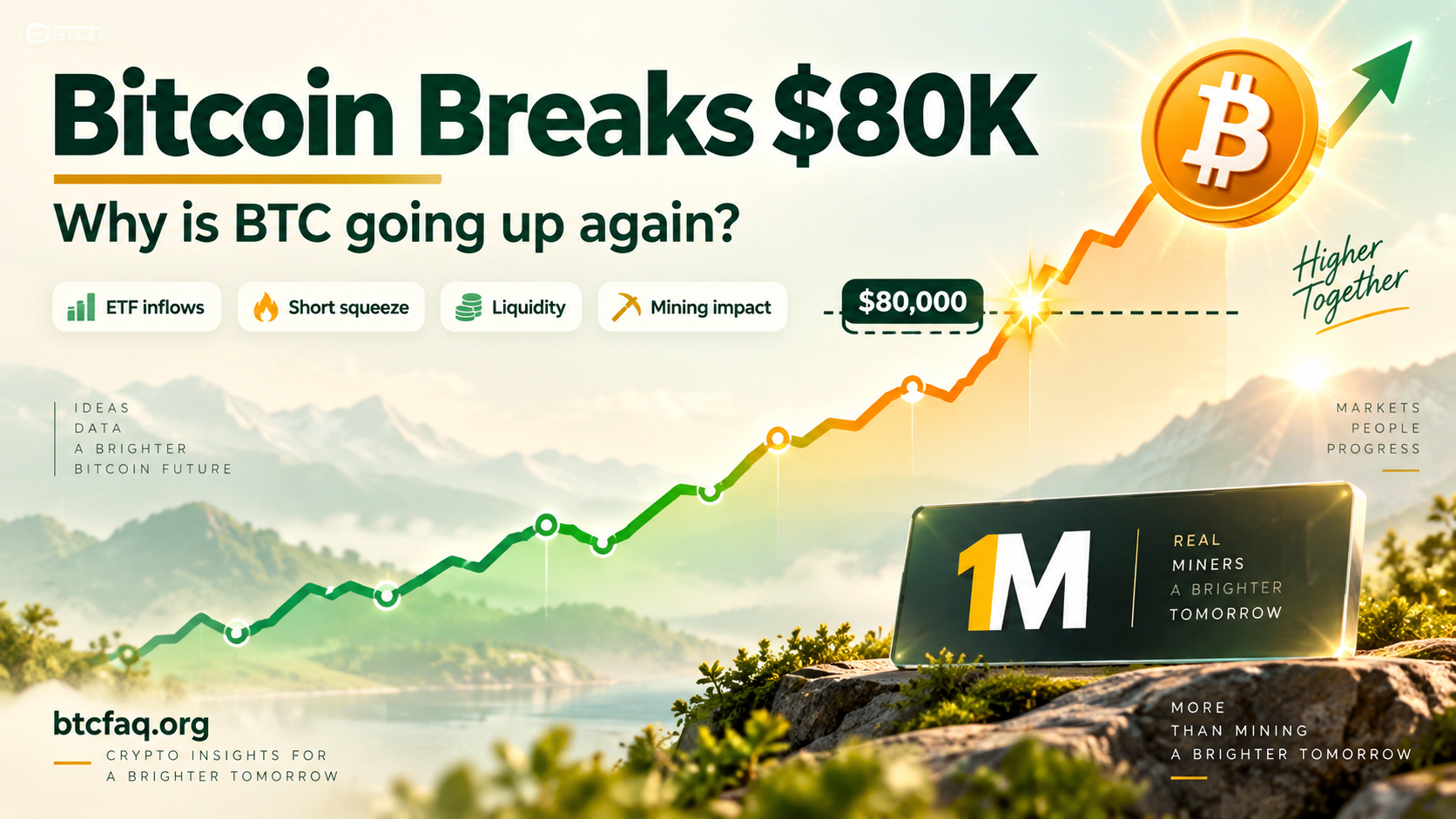
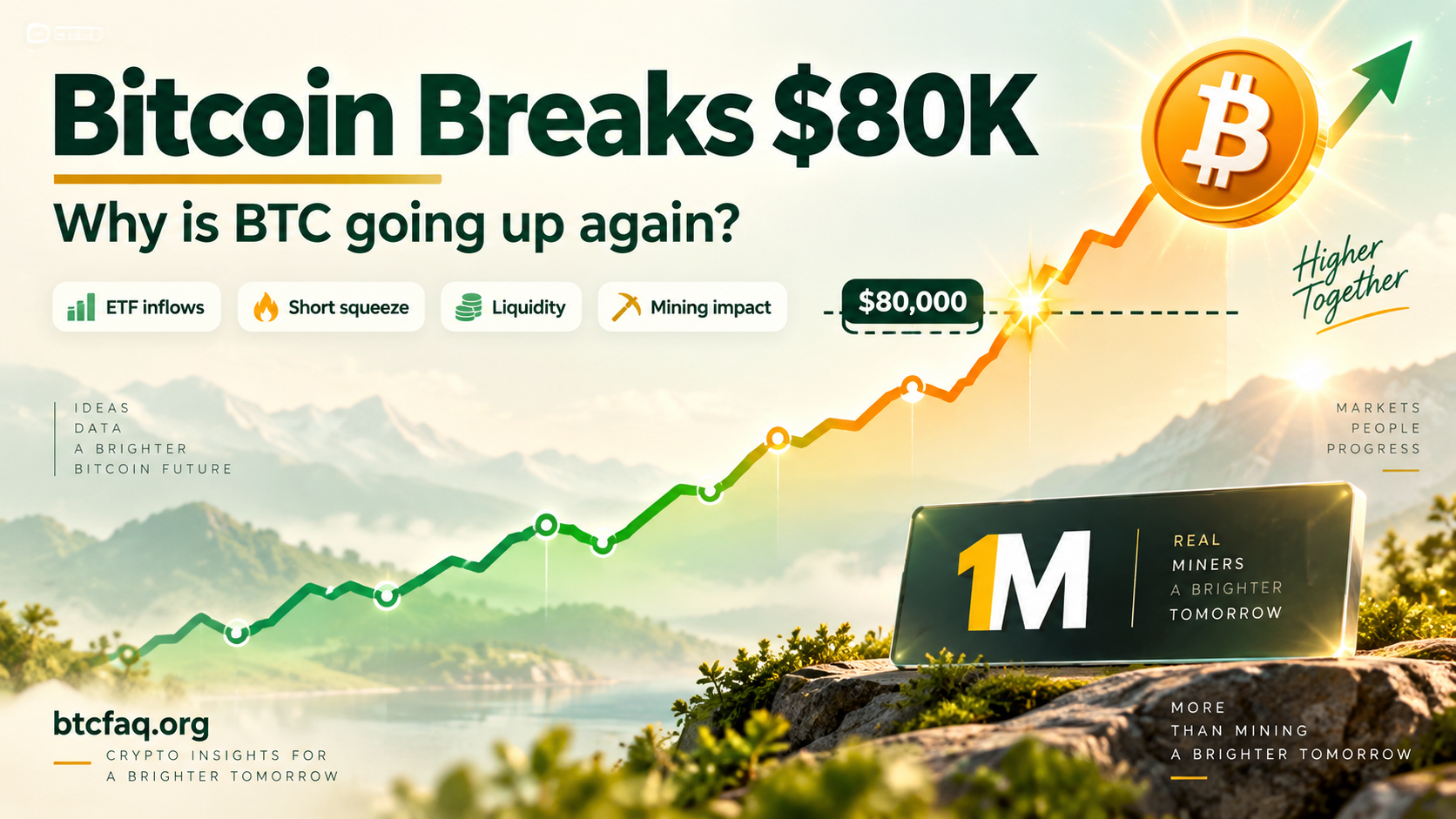
Bitcoin has spent the first week of September 2026 doing something it couldn't manage for most of the year: hovering right at the $80,000 level. It touched an intraday high of $82,283 on September 3 before sellers pushed it back down, and as of September 7 it was changing hands around $79,300–$79,900 — up more than 23% from its August 7 low. Depending on the hour you check, headlines are calling this either a breakout or a rejection, and honestly, both are true at once.
Here's what's actually behind the move, what's standing in its way, and what a rally like this means once you look past the price chart — including for the miners who keep the network running.
This article is for general education, not financial advice. Bitcoin is highly volatile, and past price behavior doesn't guarantee future results.
Zooming Out: Where This Rally Sits in Bitcoin's Bigger Cycle

Context matters here. Bitcoin's all-time high — roughly $126,000 — was set on October 6, 2025. By the end of that year, it was trading about 30% below that peak, and it spent much of the following ten months stuck below a key long-term trend line, unable to break out in either direction.
That changed sharply in August 2026. Bitcoin produced one of its strongest monthly rebounds in years and moved back above its long-term 50-month moving average after spending much of the previous year below it. That is a meaningful technical improvement, but it is not the same thing as confirmation of a new bull market. As August closed, longer-term momentum indicators such as monthly RSI and ADX were still closer to neutral than to a clearly established trend, leaving open the possibility that the move was a powerful recovery rather than the beginning of a sustained new cycle.
What's Actually Driving the Bounce

Several forces lined up during August, and the rebound makes more sense when they are viewed together rather than reduced to one headline.
- Treasury bond buybacks and liquidity expectations. U.S. Treasury Secretary Scott Bessent expanded Treasury buyback operations in August, a move markets interpreted as supportive for liquidity and financial conditions. Reuters identified the Treasury action as one of the important catalysts behind Bitcoin's sharp rebound.
- A major short squeeze. The rally was amplified by forced buying from bearish traders. On August 20 alone, roughly $2.7 billion in crypto short positions were liquidated, according to CoinDesk. That matters because forced short covering can accelerate a rally even when the buying is not entirely coming from new long-term investors.
- Spot Bitcoin ETF demand. U.S. spot Bitcoin ETFs recorded a strong run of positive flows during the rebound. From August 17 through August 27, daily flow data from Farside Investors add up to roughly $3.0 billion in net inflows, before the streak was interrupted by a net outflow on August 28. That provides evidence of genuine institutional demand alongside the leverage-driven move.
- Regulatory progress. On August 18, the SEC proposed Regulation Crypto Assets, a new framework intended to provide clearer securities rules for certain crypto-asset offerings. It remains a proposal rather than final regulation, but the continued rulemaking process is evidence that U.S. crypto regulation is moving toward greater formal definition rather than remaining completely unresolved.
What's Standing in the Way of Further Gains
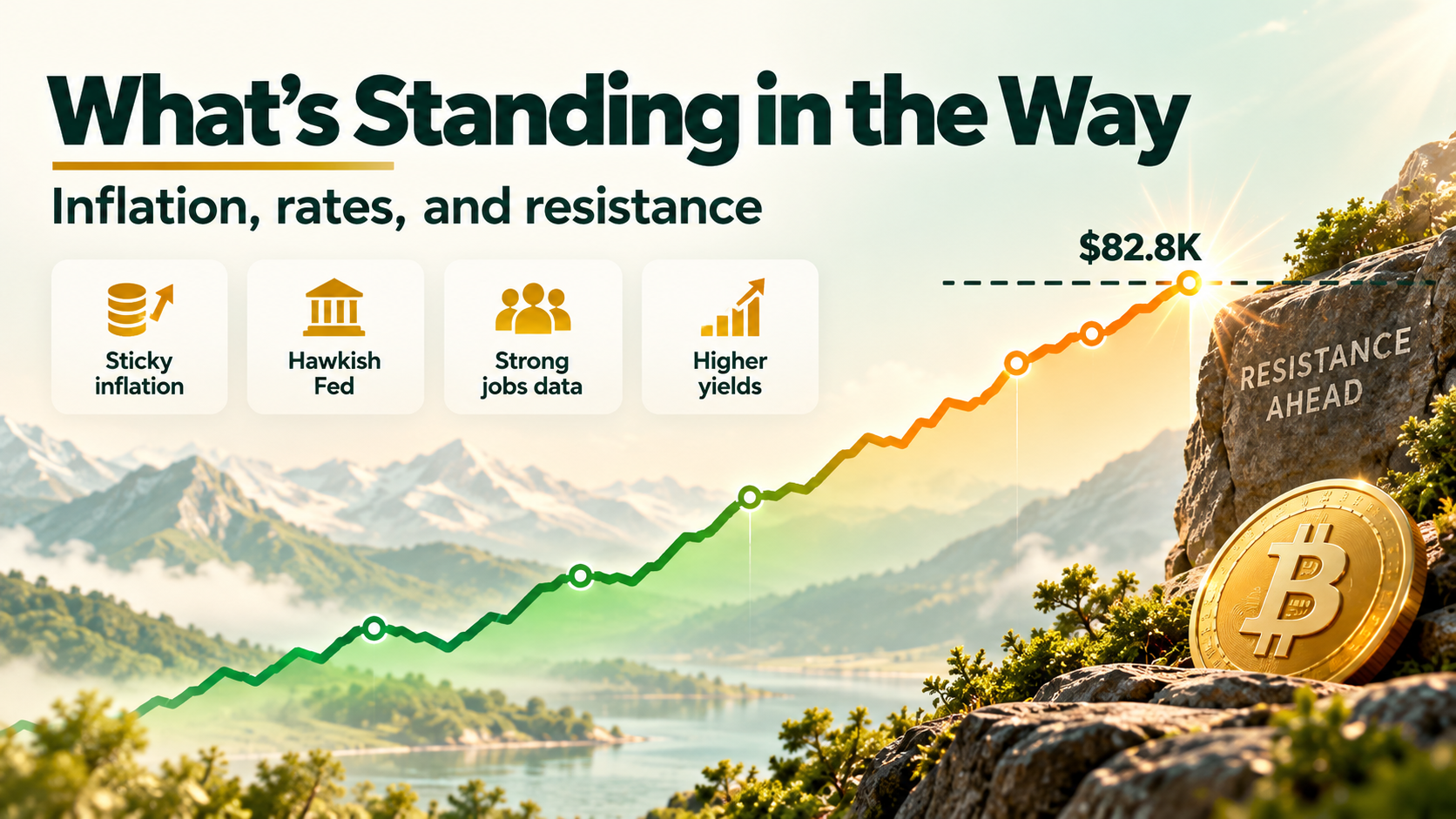
The biggest macro headwind is the renewed possibility that U.S. interest rates stay high—or move higher—because inflation remains above the Federal Reserve's target. At the Jackson Hole symposium on August 28, Federal Reserve Chair Kevin Warsh said the Fed's preferred 12-month PCE inflation measure was running at 3.7%, while the six-month measure was 4.1%. He also described the labor market as broadly consistent with full employment. Together, those conditions strengthen the case for keeping monetary policy restrictive rather than assuming rate cuts are imminent.
That concern became more important after the August jobs report showed 162,000 new jobs, substantially above expectations, pushing market-implied odds of a September rate increase higher. Geopolitical tensions have also kept energy prices elevated, adding another potential source of inflation pressure. For Bitcoin specifically, the immediate technical hurdle is around the $82,800 area, close to the May high identified by Reuters. That makes upcoming inflation data and the Federal Reserve's September decision especially important: softer inflation could relieve some pressure, while another hot reading could strengthen the case for tighter policy and higher Treasury yields.
The Supply Side Hasn't Changed

Whatever happens with rates and headlines this month, the structural backdrop underneath Bitcoin hasn't moved:
- A protocol-defined supply limit of approximately 21 million BTC, with no central authority able to unilaterally increase issuance.
- A halved block subsidy since April 2024 (down from 6.25 BTC to 3.125 BTC per block), which permanently slows the pace of new coins entering circulation.
- Long-term holder behavior, which regularly shows large portions of circulating supply sitting untouched for years, tightening the coins actually available to buyers at any given price.
None of this explains the timing of a specific week's price action, but it's the backdrop every short-term rally or pullback plays out against.
What a Rally Like This Actually Means for Bitcoin Miners

It's tempting to assume that when Bitcoin's price rises, miners simply make more money — but that's not quite how the mechanics work, and it's worth understanding why.
Mining rewards are earned in BTC, so a higher Bitcoin price can increase the dollar value of a miner's output immediately even if the amount of BTC being earned has not changed. But that advantage can narrow over time if higher profitability encourages more mining capacity to come online. More network hashrate can eventually contribute to higher difficulty at subsequent difficulty adjustments, reducing the amount of BTC earned per unit of hashrate. OneMiners' look at how the recent BTC and ZEC price rally affected mining profits walks through this relationship directly, while this Medium analysis based on a week of real mining data shows how quickly profitability can move when price, difficulty, and operating costs change together.
The more useful metric for comparing those forces is hashprice—the estimated mining revenue generated by a unit of hashrate over a given period. Hashprice incorporates Bitcoin's market value alongside network difficulty and other revenue factors such as transaction fees, which makes it much more informative for miners than BTC's spot price alone. This breakdown of whether Bitcoin miners are actually making more money during the rally illustrates why a rising Bitcoin price can temporarily improve mining revenue even if increasing network competition later absorbs part of that gain.
The reverse scenario can matter too. A sharp Bitcoin decline can make high-cost machines uneconomic, encouraging some miners to shut down. If enough hashrate leaves the network, a later difficulty adjustment can improve the competitive position of efficient operators who remain online. This article on why a Bitcoin pullback can create opportunities for miners explores that scenario, while this broader overview of Bitcoin mining economics looks at how difficulty and electricity costs can create different opportunities across a full market cycle.
Should a Single Price Level Change Your Thinking?
Probably not on its own. $80,000 is a psychologically meaningful number, but Bitcoin has already tested and failed to hold it more than once this year, and the rally that got it here is a mix of genuine institutional demand and a mechanical short squeeze — two things that don't necessarily behave the same way going forward. Whatever your view of where Bitcoin goes from here, treat any single price milestone as a prompt to dig into the underlying data, not as a conclusion by itself. And as always, never risk more than you can afford to lose.
Frequently Asked Questions
Why is Bitcoin's price going up right now? The current move reflects a combination of factors: a short squeeze that forced bearish positions to unwind, renewed spot ETF inflows, supportive comments around Treasury liquidity operations, and Bitcoin reclaiming a long-term technical trend line — though momentum indicators hadn't confirmed a full trend reversal as of early September.
What's stopping Bitcoin from breaking above $82,000–$86,000? Renewed Federal Reserve rate-hike concerns following Jackson Hole commentary on persistent inflation, a fresh spike in oil prices tied to geopolitical tension, and a strong August jobs report have all reinforced a more hawkish rate outlook — which tends to weigh on non-yielding assets like Bitcoin.
Does a Bitcoin rally automatically mean miners are earning more? Not automatically. Rising prices tend to draw in more mining hash rate, which pushes network difficulty higher and can absorb much of the individual miner's revenue gain. The more accurate way to track miner profitability is a metric called hash price, not Bitcoin's spot price alone.
Is this the start of a new bull market? No one can say that with confidence, including professional analysts. Some technical signals — like reclaiming a long-term moving average — are read as bullish, while momentum indicators suggest the trend isn't yet confirmed. Treat any prediction, including this one, with appropriate skepticism.
Is now a good time to buy Bitcoin? That depends entirely on individual financial circumstances, risk tolerance, and goals. This article is educational, not financial advice — consider speaking with a qualified financial professional before making investment decisions.
Final Thoughts
Bitcoin's push back toward $80,000 is a real move, built on a real mix of ETF demand, short covering, and a notable technical breakout — but it's happening directly alongside a renewed inflation scare and a Federal Reserve leaning more hawkish, not less. Both things are true at the same time, which is exactly why the price has spent the past week testing the same ceiling instead of running straight through it. Understanding both halves of that story is a lot more useful than any single headline number — whatever it says by the time you're reading this.
Sources & References
- Reuters — Bitcoin has challenges to face after dramatic surge — Treasury buybacks, rally structure and ~$82,793 resistance. https://www.reuters.com/markets/global-markets-technicals-graphic-2026-09-03/
- Federal Reserve — Chair Kevin Warsh's Jackson Hole remarks — 3.7% PCE inflation, six-month 4.1% measure and labor-market assessment. https://www.federalreserve.gov/newsevents/speech/warsh20260828a.htm
- Reuters — Strong August jobs report sends yields higher — 162,000 jobs and September rate-hike expectations. https://www.reuters.com/business/view-strong-august-jobs-report-sends-yields-higher-2026-09-04/
- Farside Investors — Bitcoin ETF Flow — daily U.S. spot Bitcoin ETF flows. https://farside.co.uk/btc/
- SEC — Regulation Crypto Assets — August 18 proposed rule. https://www.sec.gov/rules-regulations/2026/08/s7-2026-27
- CoinDesk — Bearish crypto bets lose record $3 billion — roughly $2.74 billion of short liquidations on August 20. https://www.coindesk.com/markets/2026/08/20/bearish-crypto-bets-lose-record-usd2-7-billion-as-bitcoin-surges-toward-usd70-000
- OneMiners — BTC/ZEC Price Rally and Mining Profits https://oneminers.com/blogs/news/btc-zec-price-rally-mining-profits-2026
- Medium — Bitcoin Mining's Margin Problem in One Week of Data https://cassys.medium.com/bitcoin-minings-margin-problem-in-one-week-of-data-5f21bf97e80d