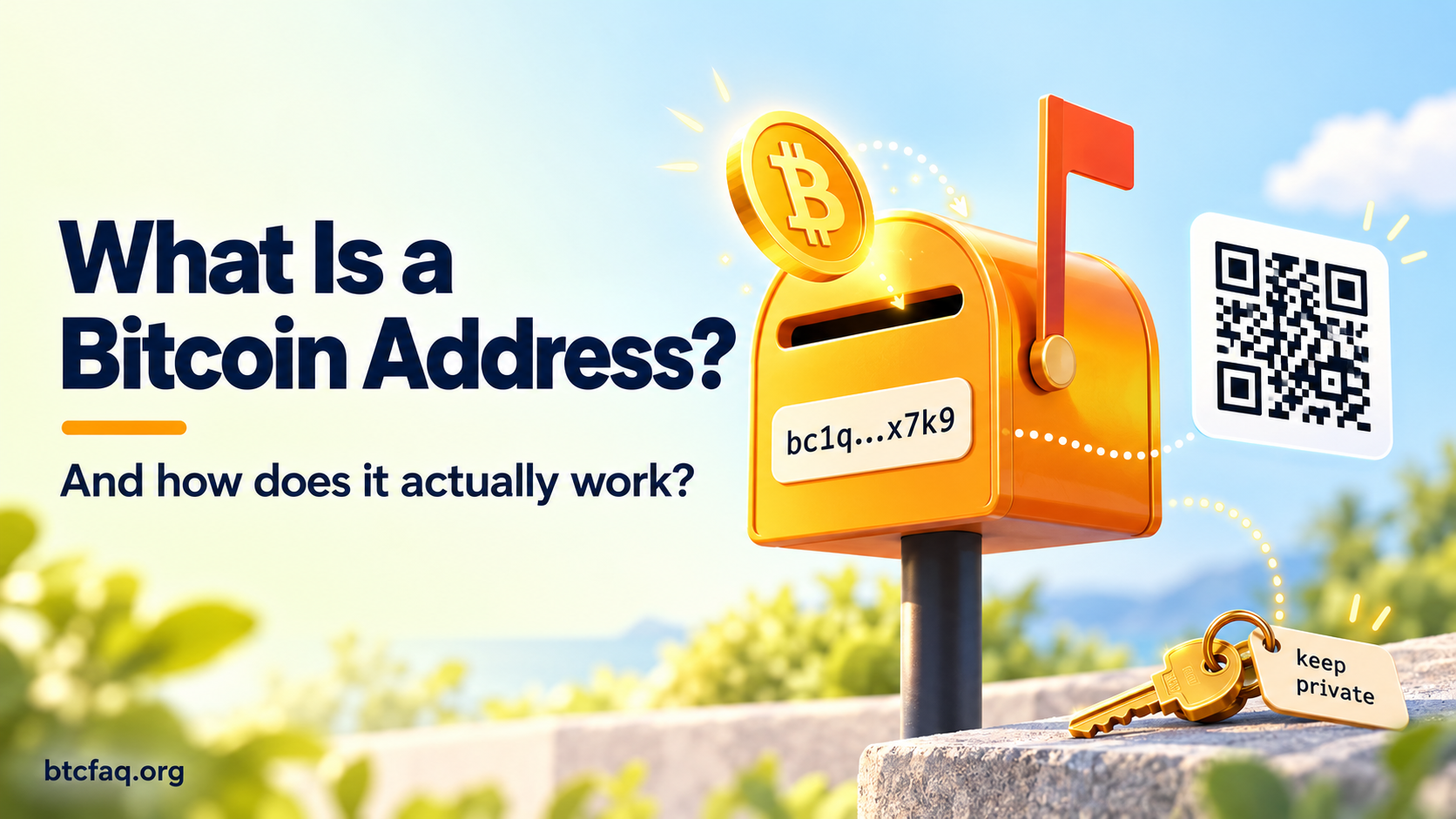
The first time you set up many self-custody Bitcoin wallets, you may be shown a list of ordinary-looking words and told to record them carefully. Those words may look simple, but they can be the most important backup in your entire wallet setup.
That list is commonly called a seed phrase, recovery phrase, or mnemonic phrase. Many Bitcoin wallets use the BIP39 mnemonic standard, although not every wallet uses the same recovery system.
The Short Answer
In a typical BIP39 wallet, the recovery phrase is usually 12 or 24 words generated from cryptographically secure randomness. The phrase is converted into a binary seed, which can then be used by a hierarchical deterministic wallet system such as BIP32 to derive the keys used by the wallet.
That distinction matters: the words themselves are not literally your Bitcoin and are not technically the same thing as a private key. They are backup information from which the wallet can reproduce the key material it needs.
Two practical rules follow:
- 1. Treat the recovery phrase as highly sensitive. If your wallet uses only the phrase and no additional BIP39 passphrase or other spending requirement, anyone who obtains the phrase can usually recreate the wallet's keys and potentially spend the funds.
- 2. Make sure you have a valid backup before relying on the wallet. If your device fails and the recovery phrase was your only usable backup, losing it may make the funds permanently inaccessible.
Why Wallets Use Words Instead of Long Numbers
Cryptographic secrets are difficult for humans to copy accurately. Mnemonic systems make backup data easier to record by representing it as a sequence of ordinary words.
A recovery-phrase explainer from the Cryptocurrency Certification Consortium gives a beginner-friendly explanation of why wallets use words rather than long strings of random characters.
How BIP39 Works
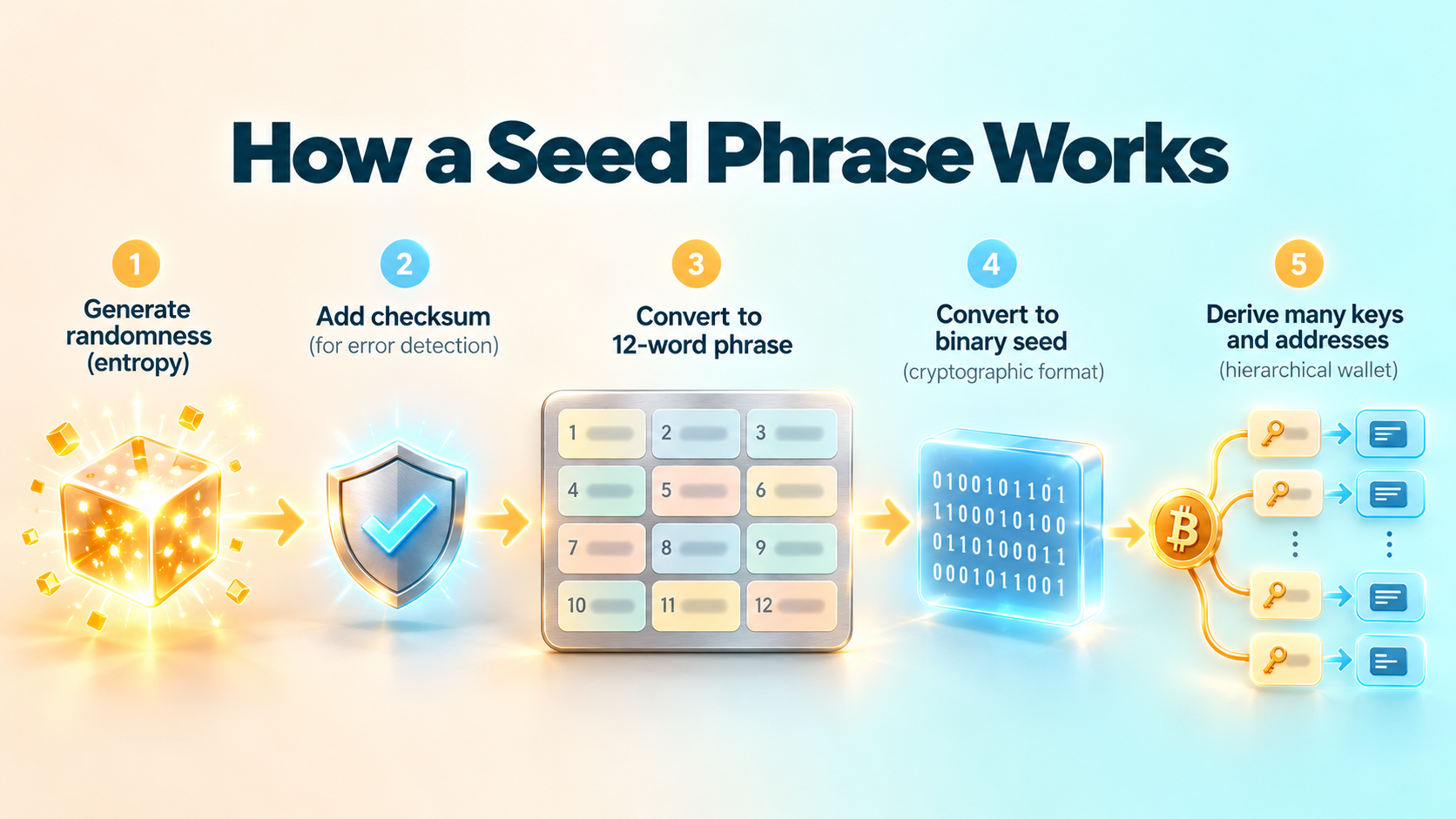
BIP39 is one of the most widely used mnemonic standards in cryptocurrency wallets. The BIP39 specification defines two main steps: generating the mnemonic phrase and converting that phrase into a binary seed.
The simplified process looks like this:
- 1. Cryptographically secure entropy is generated. BIP39 supports 128 to 256 bits of entropy.
- 2. A checksum is added. Extra checksum bits help detect many transcription errors.
- 3. The data is mapped to words. Each word comes from a 2,048-word list. Depending on the entropy size, a valid BIP39 phrase can contain 12, 15, 18, 21 or 24 words.
- 4. The mnemonic is converted into a seed. BIP39 uses PBKDF2-HMAC-SHA512 to turn the mnemonic and optional passphrase into a 512-bit seed.
- 5. A deterministic wallet derives keys from that seed. Systems such as BIP32 can use the seed to generate a hierarchy of private and public keys.
This is why a single recovery phrase can recreate many wallet keys. However, successful recovery can also depend on the wallet's passphrase, derivation paths, script types and other wallet settings, so the same words do not automatically guarantee identical recovery behavior in every wallet application.
Seed Phrase vs. Private Key vs. Password vs. Address
These terms are related, but they do different jobs.
- • Address: A public destination used to receive Bitcoin.
- • Private key: A secret cryptographic key used to authorize spending under conditions controlled by that key.
- • Password or PIN: Usually protects access to a particular wallet application or hardware device. It is not normally the underlying secret controlling the Bitcoin.
- • Recovery phrase: Backup information that many deterministic wallets use to recreate their underlying seed and key hierarchy.
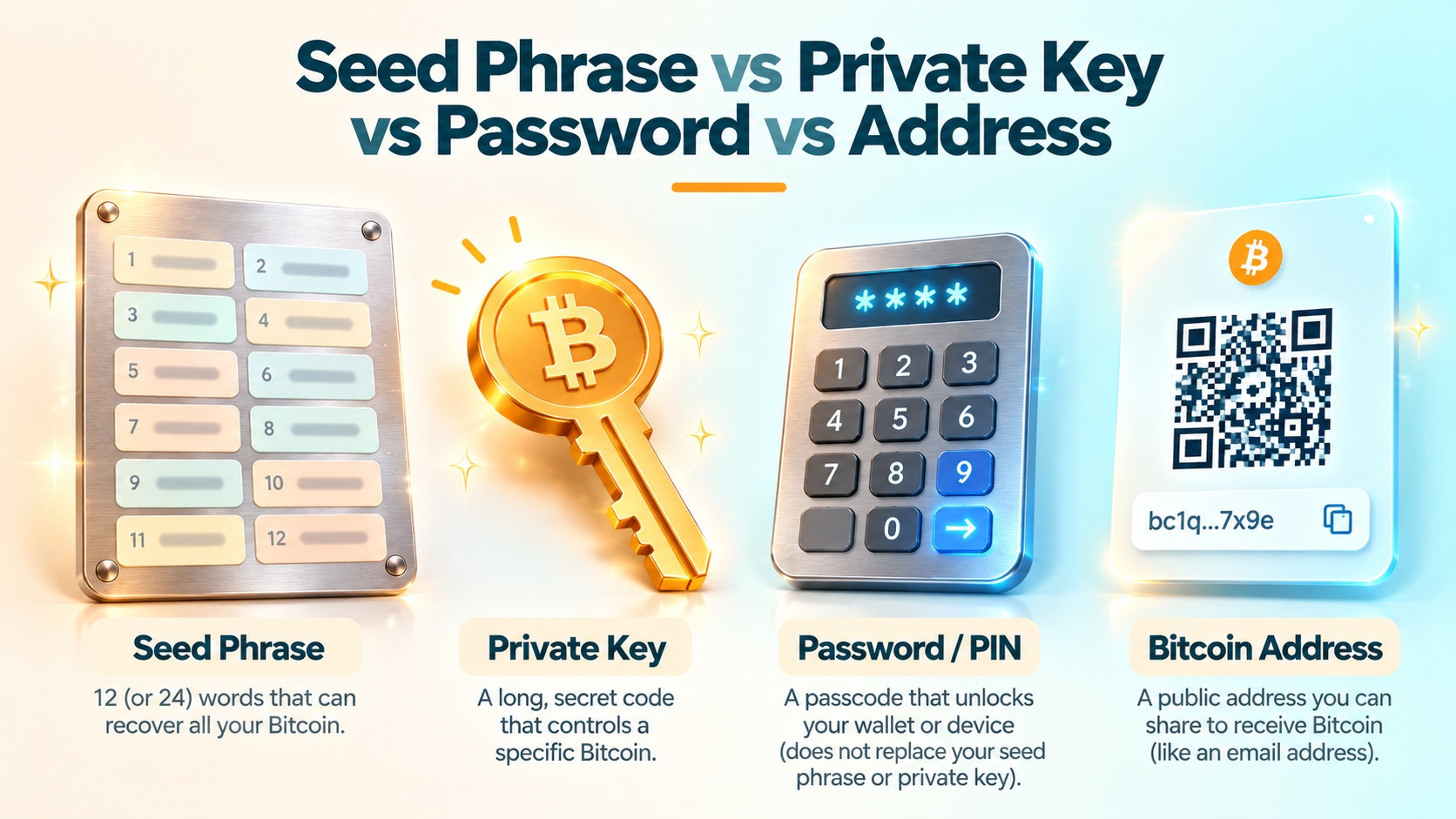
A device password can protect one copy of your wallet, while a recovery phrase may allow a compatible wallet setup to recreate the underlying keys even if the original device is gone. If you also use a BIP39 passphrase, multisignature setup or another wallet policy, the mnemonic words alone may not be sufficient.
What Happens If You Lose the Recovery Phrase?
Losing the recovery phrase does not immediately destroy your Bitcoin if your wallet still works or you have another valid backup. The danger appears when the phrase was your only recovery method and the device or wallet data containing the keys is also lost.
Bitcoin has no central password-reset system capable of recreating self-custody private keys. If every usable copy of the required key material and backup information is gone, the associated Bitcoin can become permanently inaccessible.
That lack of a central recovery authority is both a benefit and a responsibility: you remain in control of the keys, but you also have to maintain a reliable backup yourself.
How to Store a Recovery Phrase Safely
The two main goals are simple: don't lose the backup and don't let an unauthorized person obtain it.
Use durable offline storage where practical. Paper can work if protected from fire, water and accidental disposal. Metal backups can provide greater resistance to physical damage.
Avoid storing the phrase casually in digital form. Plaintext photos, screenshots, cloud notes, email drafts and unencrypted files create unnecessary exposure. If you intentionally use a digital backup, understand the additional risk and use strong encryption rather than leaving the phrase readable on an internet-connected service.
Avoid a single point of failure. A second securely stored copy can protect against fire, flooding, theft or loss of one location. Remember that every additional copy also creates another place that must remain secure.
Record the phrase exactly. Word choice and order matter.
Verify the backup safely. If your wallet or hardware device provides a built-in backup-check feature, use that rather than typing a valuable live seed into another random application. If you perform a recovery drill, use trusted hardware and follow the wallet manufacturer's recovery procedure.
Bitcoin.org's wallet security guide also recommends secure backups, multiple physical locations where appropriate, and planning for what should happen to your wallet if you become unable to access it yourself.
What You Should Never Do With a Seed Phrase
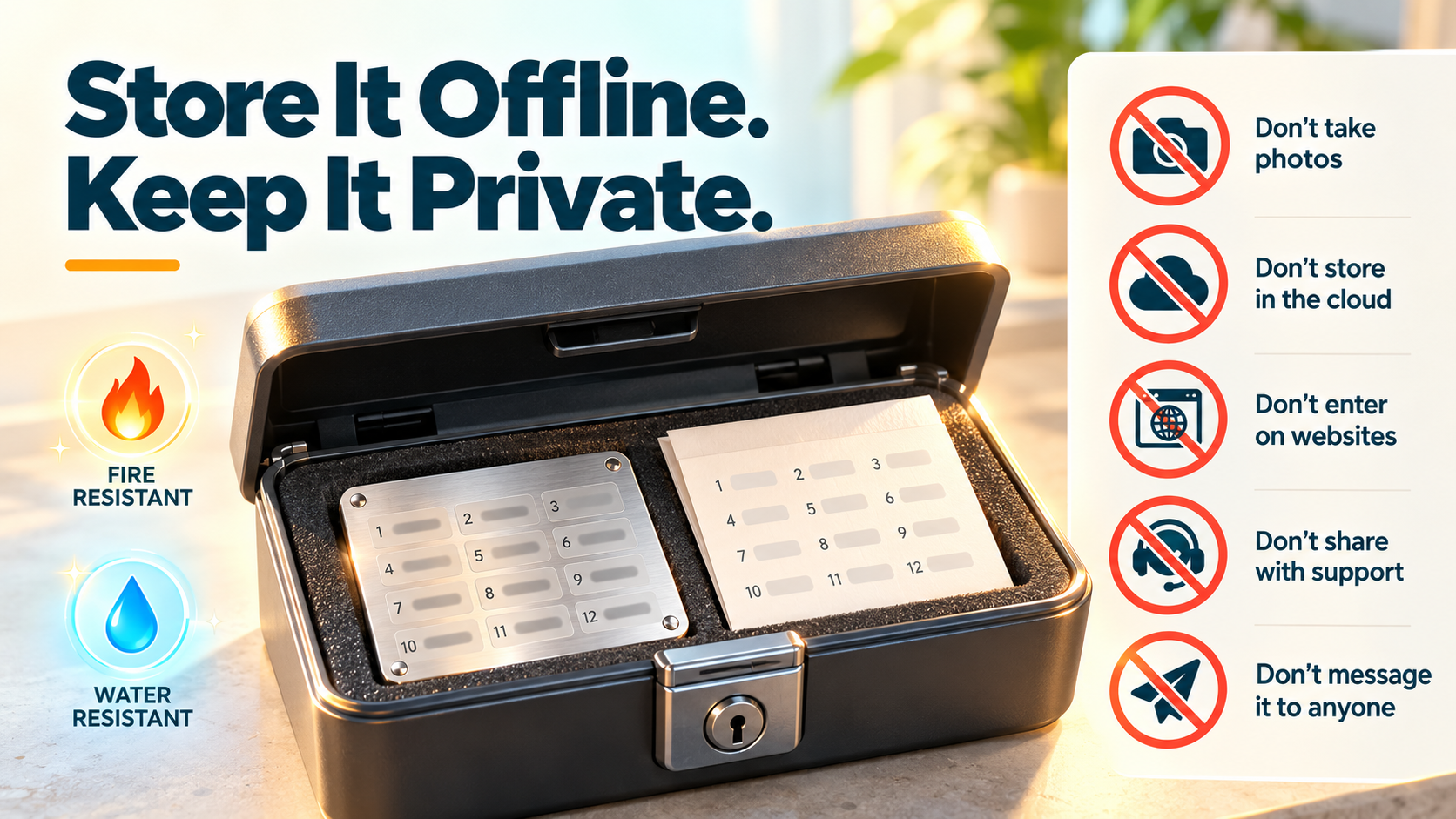
- • Never type it into a website, form, or "verification" tool. No legitimate wallet or exchange will ever ask for it.
- • Never share it with support staff, "recovery experts," or anyone who contacts you. Genuine support teams don't need it.
- • Never take a photo of it or store it in the cloud.
- • Never use a pre-filled one. If a hardware wallet arrives with a seed phrase already written on a card or in the box, it's compromised. You should always generate your own.
- • Never enter it on a device you don't trust. Doing so exposes it to keyloggers and malware.
The Scams That Target Seed Phrases
Because a seed phrase unlocks everything, scammers have built entire playbooks around getting it from you. The most common versions:
- • Fake support. Someone posing as customer support from a wallet or exchange asks you to "verify" your phrase to fix a problem.
- • Phishing sites and fake wallet apps that mimic real ones and ask you to "import" or "restore" your wallet.
- • "Recovery" services. After you post about a problem, people offer to recover your lost crypto if you share your phrase. Articles about wallet recovery often attract exactly these comments, and they are a well-known scam pattern.
- • Tampered hardware. Devices bought second-hand or from unofficial sellers may come pre-seeded, so the thief already has the phrase.
- • Urgency and pressure. Messages claiming your funds are at risk and you must act immediately are a hallmark of these scams.
The rule that covers all of them is simple: the seed phrase never goes into anything except your own wallet during setup or restoration, and nobody legitimate will ever ask for it.
Hardware Wallets and Seed Phrases
A hardware wallet is a dedicated device that keeps your keys offline and signs transactions internally. It's widely regarded as one of the best balances of security and convenience, and it still depends on a seed phrase for backup, because the device itself can be lost, damaged, or stolen.
If you're curious how hardware wallets compare, this guide to hardware wallets for Bitcoin miners covers several popular devices and why cold storage matters for people who accumulate Bitcoin. Note that it comes from a company that also sells mining equipment, so treat it as one perspective and compare options independently before you buy. Whichever device you choose, buy it new from the manufacturer or an authorized seller.
The Optional Extra Word: The Passphrase
Many wallets support an optional passphrase, sometimes described as a "25th word." It's an extra secret you choose, combined with your seed phrase when generating your keys. The BIP 39 specification explains that any passphrase produces a valid wallet, and that using none is simply the same as using an empty one.
The benefit is extra protection: even if someone finds your written words, they can't get into the wallet without the passphrase. The tradeoff is real, though:
- • If you forget the passphrase, your funds are gone, even if you still have all your words.
- • A different passphrase opens a completely different wallet. A typo doesn't produce an error, it just shows an empty wallet.
- • It needs its own backup, stored separately from the words.
For beginners with modest amounts, it's usually wise to master the basics before adding this layer.
Hardware Wallets and Recovery Phrases
Hardware wallets are dedicated signing devices designed to keep private keys isolated from ordinary computer software. Many popular hardware wallets use mnemonic recovery phrases, but recovery systems vary by manufacturer and configuration.
If you're comparing devices, this OneMiners guide to hardware wallets for Bitcoin miners provides an overview of several models and explains why miners may prefer cold-storage devices for accumulated payouts. Because it is a company-authored comparison, verify device specifications and backup features with the hardware manufacturer's current documentation before purchasing.
Whatever device you choose, generate its recovery information yourself during setup. Never use a hardware wallet that arrives with a pre-written seed phrase.
The Optional BIP39 Passphrase
BIP39 supports an optional passphrase, sometimes casually called a "25th word." That nickname is misleading because the passphrase does not have to be a single word.
The mnemonic phrase and passphrase are combined when generating the BIP39 seed. Every different passphrase generates a different deterministic wallet.
That can provide an additional layer of protection for funds stored in a passphrase-protected wallet, but it adds another recovery requirement:
- • forgetting the exact passphrase can make that wallet inaccessible;
- • a typo normally derives a different wallet rather than producing an obvious error;
- • the passphrase therefore needs a reliable backup strategy of its own.
Beginners should understand ordinary backup and recovery thoroughly before adding this layer.
How to Recover a Wallet From a Recovery Phrase
This Medium guide to recovering Bitcoin wallets from a seed phrase provides a useful practical walkthrough, but wallet compatibility deserves an important caveat.
A recovery phrase is not automatically portable to every wallet. Successful recovery can depend on whether the new wallet supports the same mnemonic standard, BIP39 passphrase, derivation path, address type and wallet structure.
A safer recovery process is:
- 1. Identify the wallet or device that originally created the backup.
- 2. Use its official recovery documentation whenever possible.
- 3. Enter the recovery phrase only into trusted wallet software or directly into a hardware signing device when the device supports on-device recovery.
- 4. If the wallet appears empty after recovery, verify the passphrase, derivation path and address type before assuming the funds are gone.
Avoid entering a valuable recovery phrase into extra applications simply to "test" it. Every additional device or application that sees the phrase increases exposure.
Seed Phrase Alternatives and Advanced Backups
A standard mnemonic backup is not the only recovery design available.
Multisignature wallets can distribute spending authority across multiple independent keys, so compromising one device or location does not necessarily compromise the wallet.
Wallet descriptors and additional recovery metadata can preserve information such as script types and derivation paths that a mnemonic phrase alone may not fully describe.
SLIP-0039 is a separate standard for Shamir-style secret sharing. It can divide a wallet backup into multiple shares, with a chosen minimum number required for recovery.
Do not simply cut a BIP39 phrase into arbitrary pieces and assume that is equivalent to a formal secret-sharing system. Naive splitting can create poor redundancy and confusing recovery failure modes.
These approaches can improve resilience, but they also add complexity. For many beginners, a carefully protected conventional wallet backup is safer than an advanced setup they do not fully understand.
What About Mining Rewards?
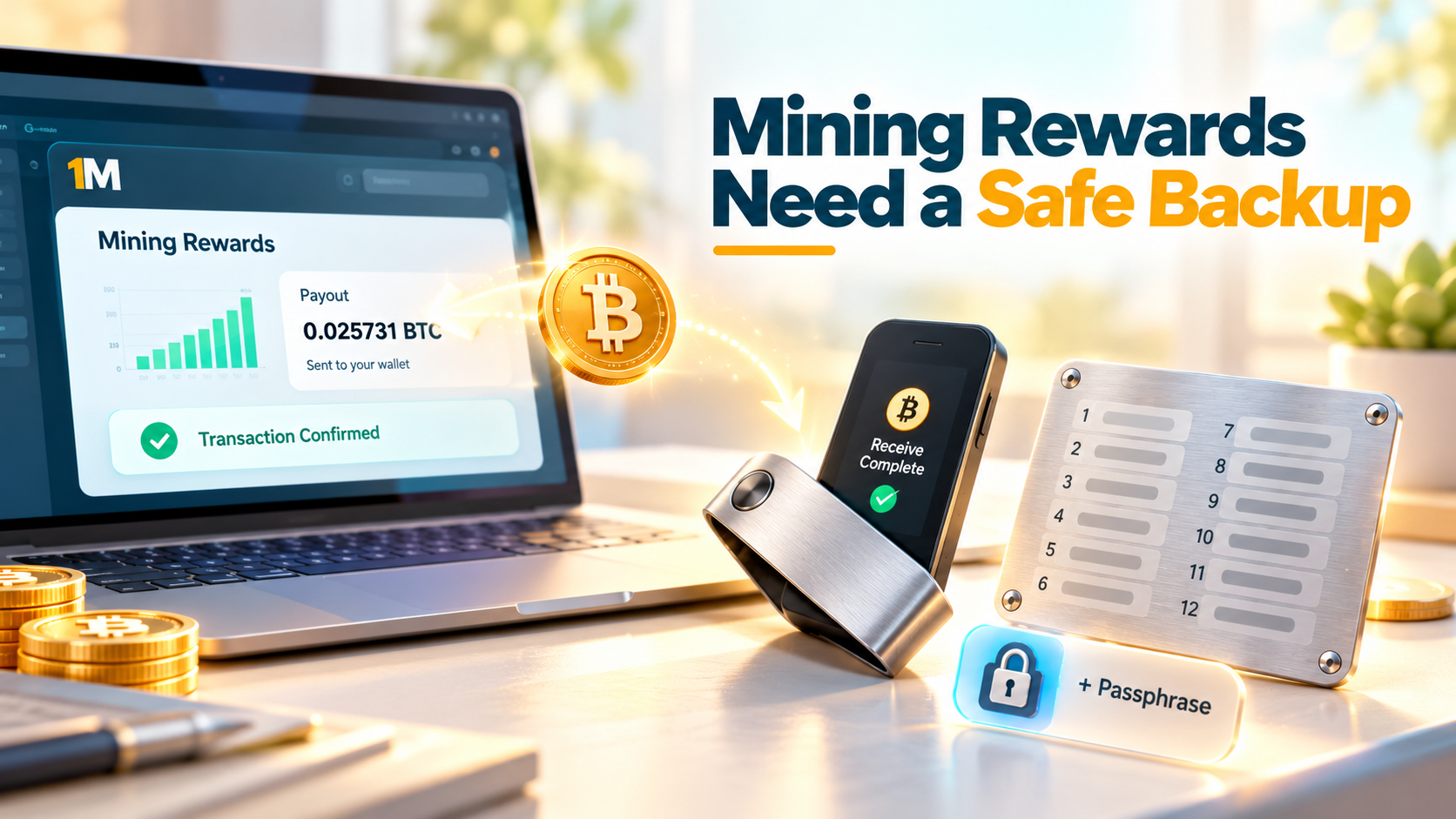
If you earn Bitcoin through mining, use a payout destination controlled by a self-custody wallet whose keys and recovery method you understand and have backed up properly. A seed phrase is one common backup method, but it is not the only possible self-custody design.
Frequently Asked Questions
How many words are in a seed phrase? Most commonly 12 or 24, although the standard also allows 15, 18, and 21. All of them are generated from the same fixed list of 2,048 words.
Is a seed phrase the same as a private key? No. A private key is an individual cryptographic secret used to authorize spending. A BIP39 recovery phrase is backup information that can be converted into a seed from which a deterministic wallet can derive many keys.
Can I use my seed phrase in a different wallet? Sometimes. Many wallets support BIP39, but successful recovery also depends on the passphrase, derivation paths, address types and wallet structure. If possible, follow the original wallet's official recovery instructions first.
Can someone guess my seed phrase? Not in any realistic sense. The amount of randomness behind a properly generated phrase is far too large to guess.
What if I think someone has seen my seed phrase? Treat it as compromised. Create a brand-new wallet with a new seed phrase and move your funds to it as soon as possible.
Should I store my seed phrase in a password manager? For significant self-custody funds, many users prefer an offline physical backup because any internet-connected storage creates another attack surface. If you intentionally use digital backup storage, never store the phrase as unencrypted plaintext and make sure you understand the security model and recovery risks.
Does an exchange give me a seed phrase? A normal custodial exchange account usually does not, because the exchange controls the underlying keys. Some companies also offer separate self-custody wallet products, and those may provide a recovery phrase or another backup method.
Final Thoughts
A seed phrase looks like a small, humble list of words, but it's the key to your entire Bitcoin wallet. It can bring your funds back from a lost phone, a broken device, or a deleted app, and in the wrong hands it can empty them in seconds. Treat it as the single most valuable thing in your setup: write it carefully, store it offline in more than one place, test your backup, never share it, and never type it anywhere except your own wallet. Do that, and you'll have mastered the part of Bitcoin that trips up more beginners than any other.