"Is Bitcoin safe?" sounds like a simple yes-or-no question, but it isn't really one question at all — it's several, bundled together. Is the underlying technology secure? Is your money safe once you buy it? Is the price going to crash? Are there scams to watch out for? Each of these has a different answer, and beginners are usually asking about all of them at once without realizing it.
This guide breaks the question apart so you can walk away with a genuinely useful answer, not just a reassuring headline.
This article is educational, not financial advice. Bitcoin is volatile and carries real risks — do your own research and never invest more than you can afford to lose.
Is the Bitcoin Network Itself Safe?

Bitcoin has developed a strong security track record, but calling it completely unhackable would be inaccurate. Its software has had serious vulnerabilities during its history. Most notably, a value-overflow bug was exploited in August 2010 and temporarily allowed an invalid transaction to create an enormous amount of bitcoin before developers released a fix and the affected blockchain history was replaced. Other bugs and network incidents have also required software updates over the years.
What makes Bitcoin resilient today is the combination of proof of work, decentralized validation, cryptographic signatures, and independent nodes enforcing consensus rules. Changing confirmed transaction history requires an attacker to compete with the ongoing proof of work produced by the network, which becomes progressively harder as additional blocks are added.
Bitcoin is also decentralized rather than dependent on one central server or database. Independent nodes verify blocks and transactions according to the rules they choose to enforce, so compromising one company or server does not give an attacker control of the Bitcoin network as a whole.
That does not mean every type of attack is impossible. A sufficiently powerful attacker could potentially disrupt block production, censor some transactions, or reorganize recent blocks. What they cannot simply do through mining power alone is generate arbitrary valid signatures, spend coins whose keys they do not control, or force independently validating nodes to accept blocks that violate the consensus rules they enforce.
So the more accurate conclusion is: Bitcoin's network has a long and unusually resilient security history, but it is not literally immune to bugs, attacks, or operational incidents.
Is Bitcoin's Price Safe?
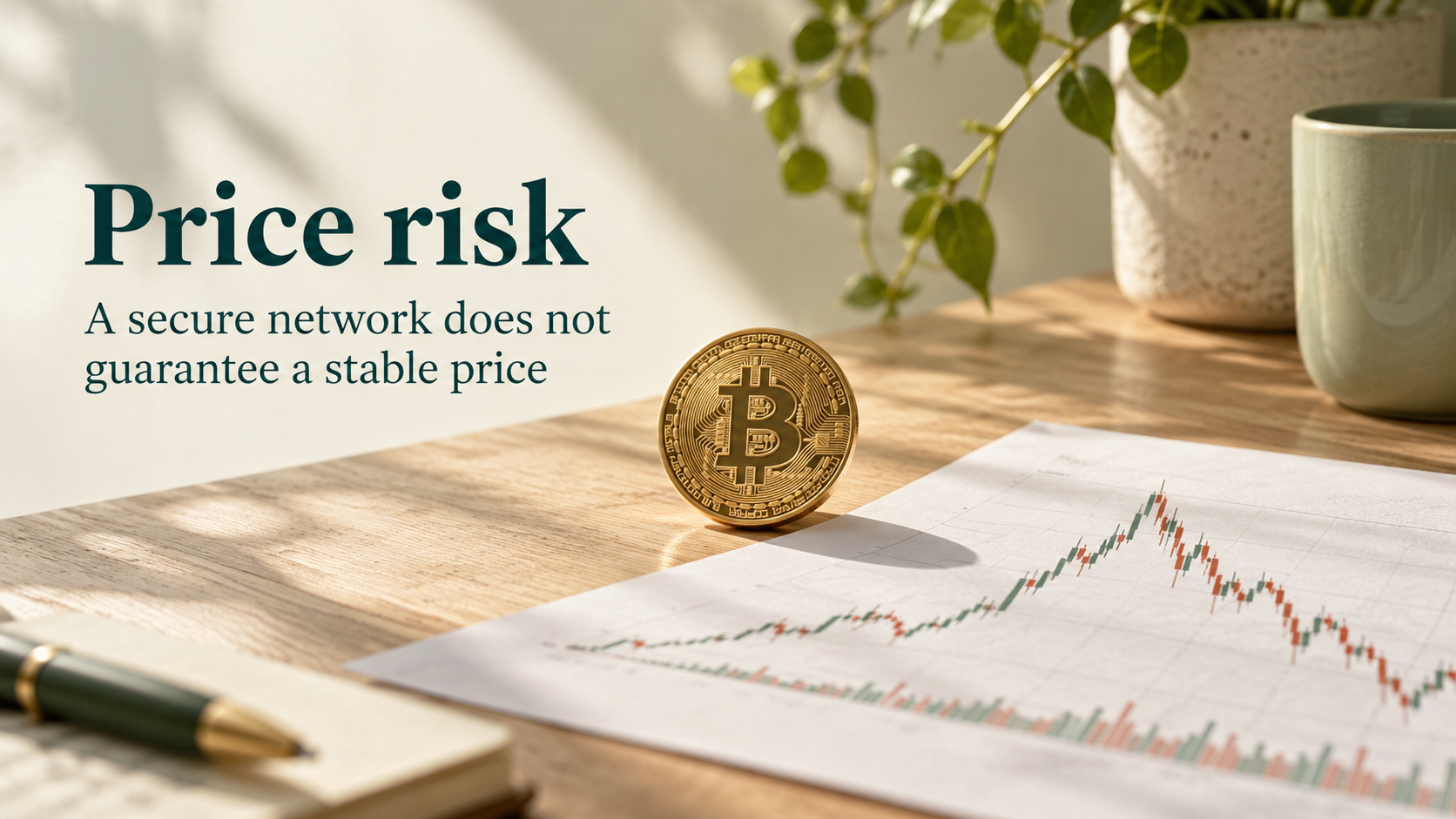
This is a completely different question from network security, and it's important not to conflate the two. Bitcoin's price is highly volatile — it has experienced multiple drawdowns of 50% or more throughout its history, sometimes within a matter of months.
Price volatility isn't a flaw in the technology; it's a characteristic of a relatively new, actively traded asset with a fixed supply and evolving adoption. But it does mean that "safe" in the sense of "my money won't lose value" is simply not a guarantee Bitcoin can offer, regardless of how secure the underlying network is.
Is It Safe to Store Bitcoin?
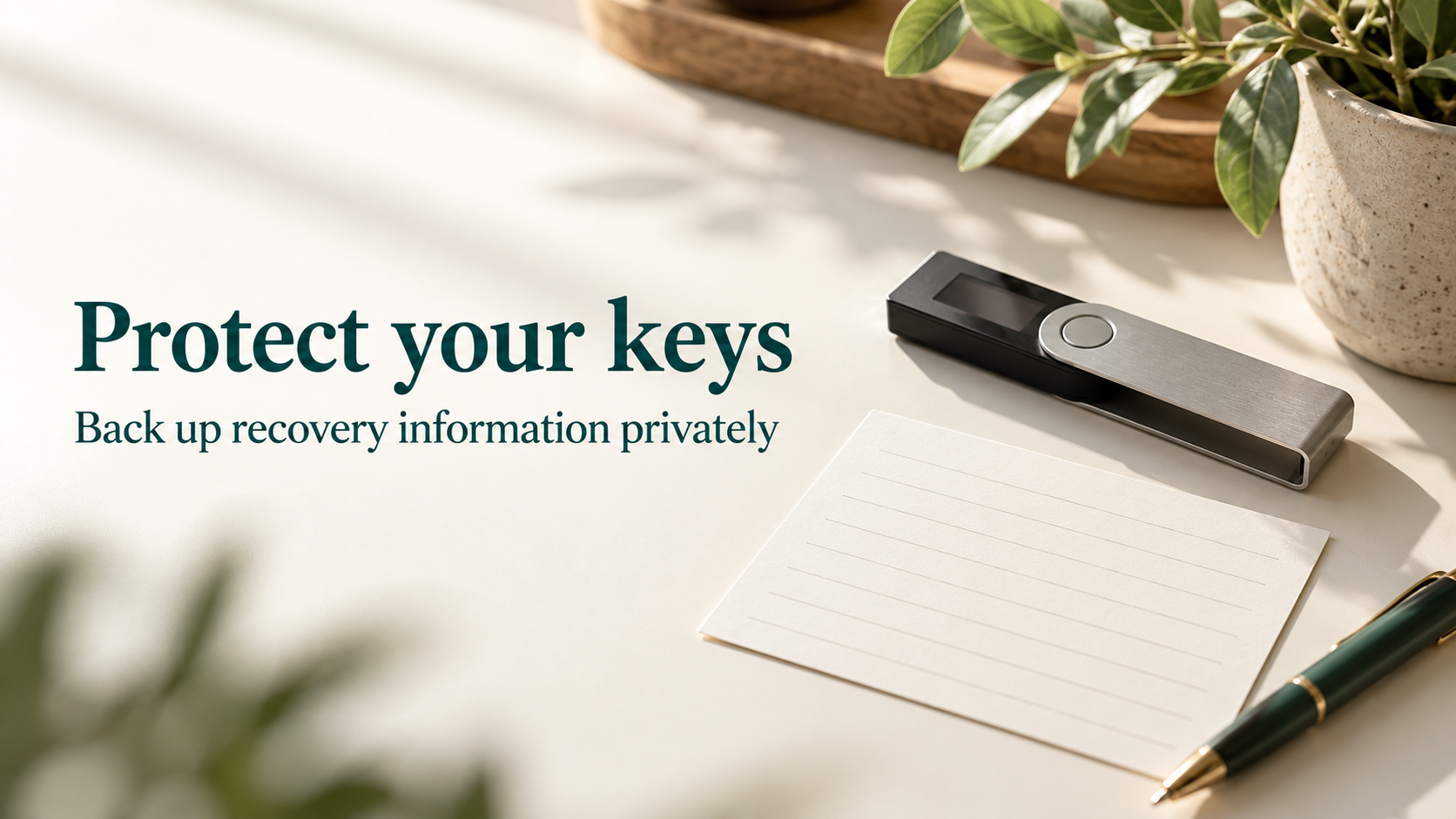
A large share of Bitcoin's practical security risk comes not from the blockchain itself, but from how the keys and accounts used to access funds are protected.
In a typical self-custody wallet, private keys are used to produce the signatures required to spend Bitcoin. More advanced setups can use multiple keys or additional spending conditions. If the required keys or recovery information are permanently lost, the corresponding Bitcoin may become inaccessible. If an attacker obtains enough information to satisfy the wallet's spending conditions, the funds can be stolen.
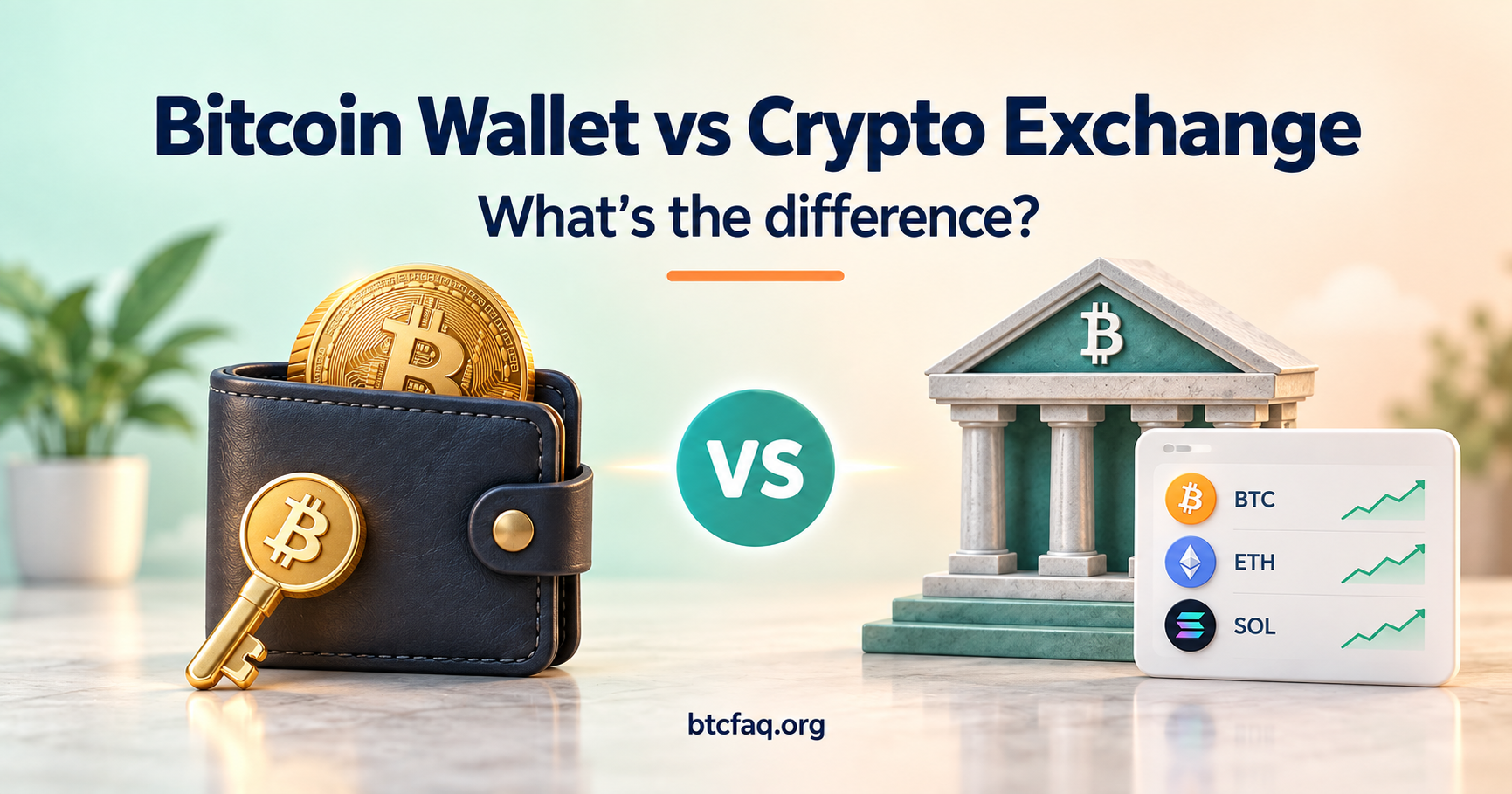
Your risk therefore depends heavily on how you hold Bitcoin. A custodial exchange introduces reliance on that company's security, solvency, and withdrawal systems. A self-custody wallet removes that particular dependency but makes you responsible for protecting keys, recovery information, devices, and backups.
OneMiners' Crypto Wallet Safety Guide provides useful broader crypto-wallet security guidance, including phishing, suspicious websites, recovery information, hardware wallets, and wallet interactions. Some sections focus on token approvals and DeFi-style permissions, which are more relevant to other crypto networks than to native Bitcoin.
Common Scams Beginners Should Watch For
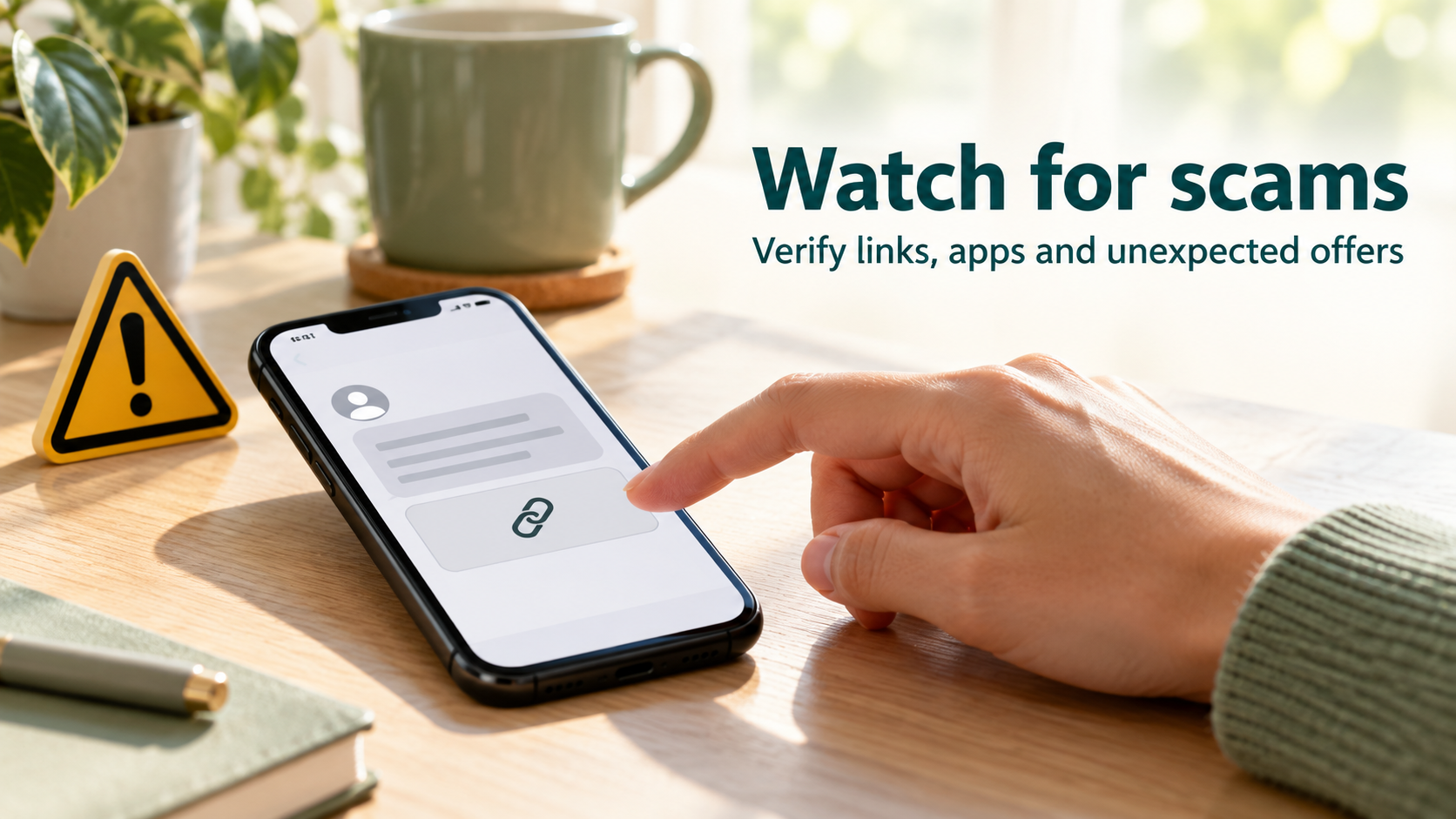
Scams are a major practical risk for cryptocurrency users, and most rely on deception rather than breaking Bitcoin's cryptography.
Common examples include:
- Phishing sites and fake wallet or exchange apps designed to steal passwords, recovery phrases, or other credentials.
- Impersonation scams, where criminals pretend to represent an exchange, government agency, customer-support team, celebrity, employer, or romantic interest.
- Fake investment platforms, where victims are shown fabricated profits and encouraged to keep depositing more cryptocurrency.
- Guaranteed-return schemes, promising unusually high or risk-free profits.
- Fake giveaways, including schemes claiming that Bitcoin sent to an address will be returned or doubled.
- Recovery scams, where someone who has already lost money is contacted by a person falsely claiming they can recover the stolen funds for an upfront payment.
If you also use Ethereum, tokens, DeFi platforms, or other smart-contract networks, malicious token approvals and wallet permissions create an additional class of risk that does not work exactly the same way as ordinary Bitcoin transactions.
The safest habit is to treat unexpected investment offers, urgent requests, requests for a recovery phrase, and promises of guaranteed profit as serious warning signs. The FTC and FBI both warn that cryptocurrency investment fraud frequently relies on social engineering, fake platforms, impersonation, and unrealistic return promises rather than technical attacks on a blockchain.
Is Buying Bitcoin Through an Exchange Safe?
A cryptocurrency exchange is a common way to convert regular currency into Bitcoin, but using one introduces custodial risk.
When an exchange holds Bitcoin for you, you generally rely on the platform to secure the underlying assets, maintain accurate account records, protect its systems, remain financially solvent, and process withdrawals. Exchanges can use substantial security controls and operate under regulatory requirements in some jurisdictions, but that does not make losses, hacks, insolvency, account restrictions, or operational failures impossible.
Self-custody presents a different risk profile. It removes dependence on an exchange for access to the Bitcoin, but you become responsible for securing the keys and recovery information yourself.
Neither arrangement is automatically risk-free. Beginners should understand who controls the keys, what recovery options exist, what fees or withdrawal restrictions apply, and what protections are available in their jurisdiction before deciding where to hold Bitcoin.
A Practical Safety Checklist Before You Buy
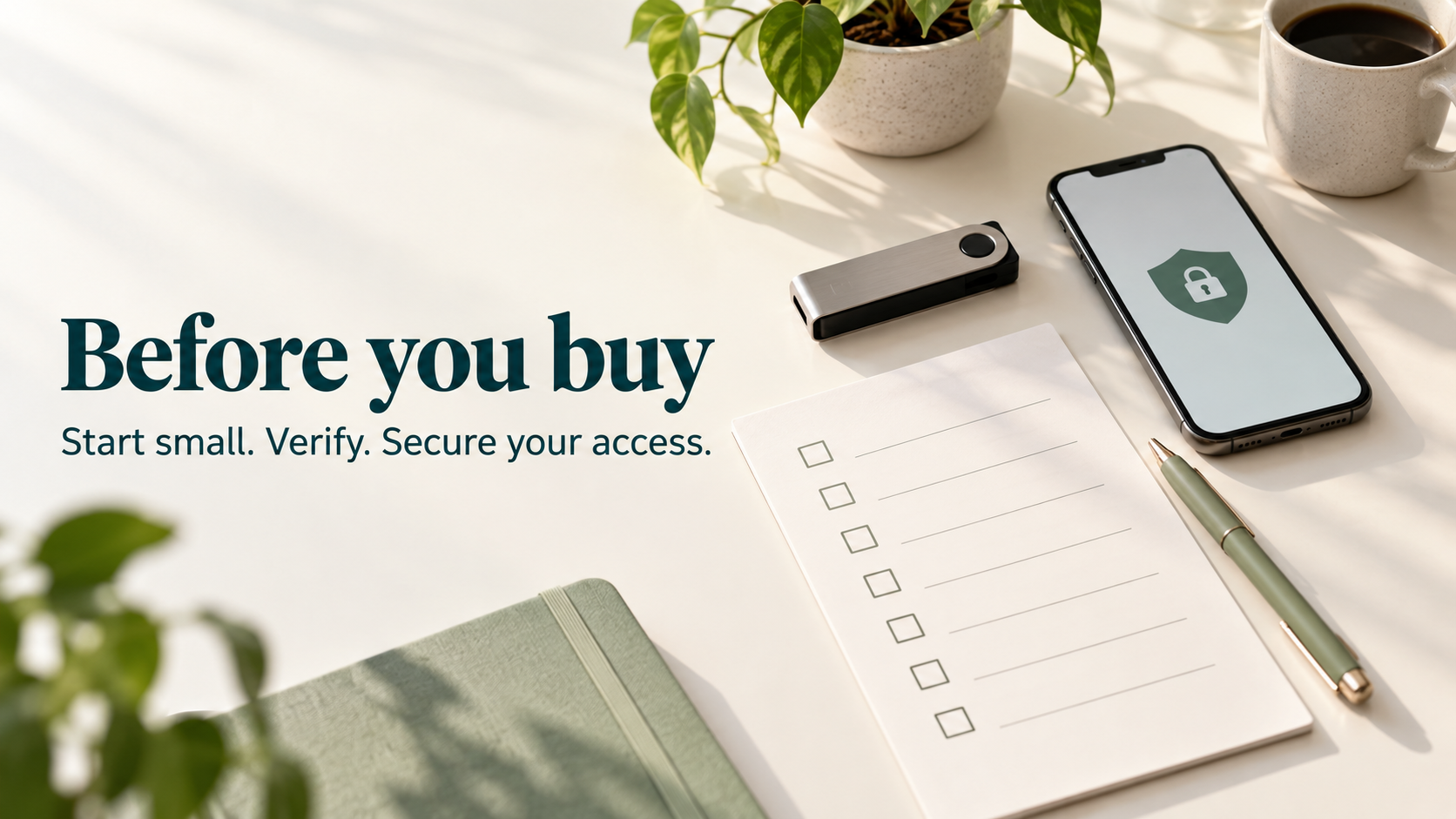
If you're preparing to buy Bitcoin for the first time, these practices can reduce avoidable risks:
- Research the platform or wallet before using it. Confirm that you're on the official website or using the authentic application, and check what company actually provides the service.
- Use strong account security. Create a unique password and enable the strongest multi-factor authentication the platform supports.
- Learn with a small amount first. Becoming familiar with deposits, withdrawals, wallet addresses, fees, and backups before handling larger amounts can reduce costly mistakes.
- Never disclose a private key or recovery phrase to someone claiming to provide support. Anyone with the necessary recovery information may be able to take control of the wallet.
- Verify addresses, URLs, and applications carefully. Malware and phishing sites can substitute addresses or imitate legitimate services.
- Treat guaranteed returns and artificial urgency as warning signs. Legitimate investments still involve risk.
- Consider more isolated key storage for funds that do not need frequent access. Hardware wallets and other cold-storage arrangements can reduce exposure of private keys to ordinary internet-connected devices, but they still require secure backups and careful setup.
Bitcoin.org's wallet security guidance provides additional Bitcoin-specific information about custodial services, backups, offline storage, hardware wallets, and software updates.
What About Regulatory and Legal Risk?
Bitcoin's legal and regulatory treatment varies by jurisdiction. Rules can differ for taxation, exchange licensing, custody, reporting, consumer protection, and the use of cryptocurrency for payments or business activity.
Those rules also change over time, so a legal situation in one country should not be assumed to apply somewhere else. Anyone dealing with significant amounts, operating a business, or moving Bitcoin across jurisdictions should check the current requirements that apply where they live or operate.
So — Is Bitcoin Actually Safe?
There isn't one useful yes-or-no answer.
The Bitcoin protocol and network have demonstrated substantial resilience, but Bitcoin software has had serious vulnerabilities in its history and no complex technical system should be described as completely immune to failure.
Bitcoin's market price is highly volatile, so network security does not mean the value of a BTC investment is stable.
Bitcoin custody can be secure, but the risks differ depending on whether you rely on an exchange or control the keys yourself.
And fraud and social engineering remain major practical threats, especially because Bitcoin transactions can be difficult or impossible to reverse once confirmed.
A better summary is: Bitcoin's network security, investment risk, custody risk, and scam risk are four different questions, and each needs to be evaluated separately.
Frequently Asked Questions
Has Bitcoin ever had a serious security failure? Yes. Bitcoin has had software vulnerabilities and network incidents during its history. In 2010, an integer-overflow vulnerability was exploited to create an invalid transaction with an enormous amount of bitcoin; developers patched the issue and the affected blockchain history was replaced. Later vulnerabilities have also required urgent software updates. This is different from saying an attacker has permanently broken Bitcoin's cryptography or gained unrestricted control over the current network.
Is it safe to keep Bitcoin on an exchange? An exchange can provide convenient custody, but it introduces dependence on the platform's security, financial condition, policies, and withdrawal systems. Self-custody removes that particular counterparty dependency but creates greater responsibility for key and backup security.
What's a common way people lose cryptocurrency to scams? Phishing, impersonation, and fraudulent investment schemes are major categories. Scammers frequently rely on fake websites, social engineering, urgency, or promised returns rather than attacking Bitcoin itself.
Is Bitcoin riskier than traditional investments? That depends on what it is being compared with and which type of risk is being measured. Bitcoin has historically experienced substantial price volatility and does not provide the same cash flows, guarantees, or legal protections as many traditional financial products. Investors should evaluate those differences rather than relying on a single universal risk ranking.
Do I need a hardware wallet to use Bitcoin securely? Not necessarily. Hardware wallets can reduce exposure of private keys to general-purpose internet-connected devices and are commonly used for funds that do not require frequent access. They still require correct setup, secure backups, and careful transaction verification.
Final Thoughts
Asking "is Bitcoin safe?" is useful only after deciding which risk you're asking about. Bitcoin's protocol has demonstrated strong resilience, but it has experienced real software vulnerabilities. Its market price can move sharply. Exchanges introduce custodial and counterparty risk, while self-custody introduces key-management and backup responsibilities. And scams remain a serious threat regardless of how secure Bitcoin's cryptography is.
The goal therefore isn't to assume that Bitcoin is either completely safe or inherently unsafe. It's to understand where each risk comes from and choose security practices appropriate to how you buy, store, and use it.
For broader mining and hardware education as you explore the ecosystem further, Cassys' Medium writing provides additional related reading.