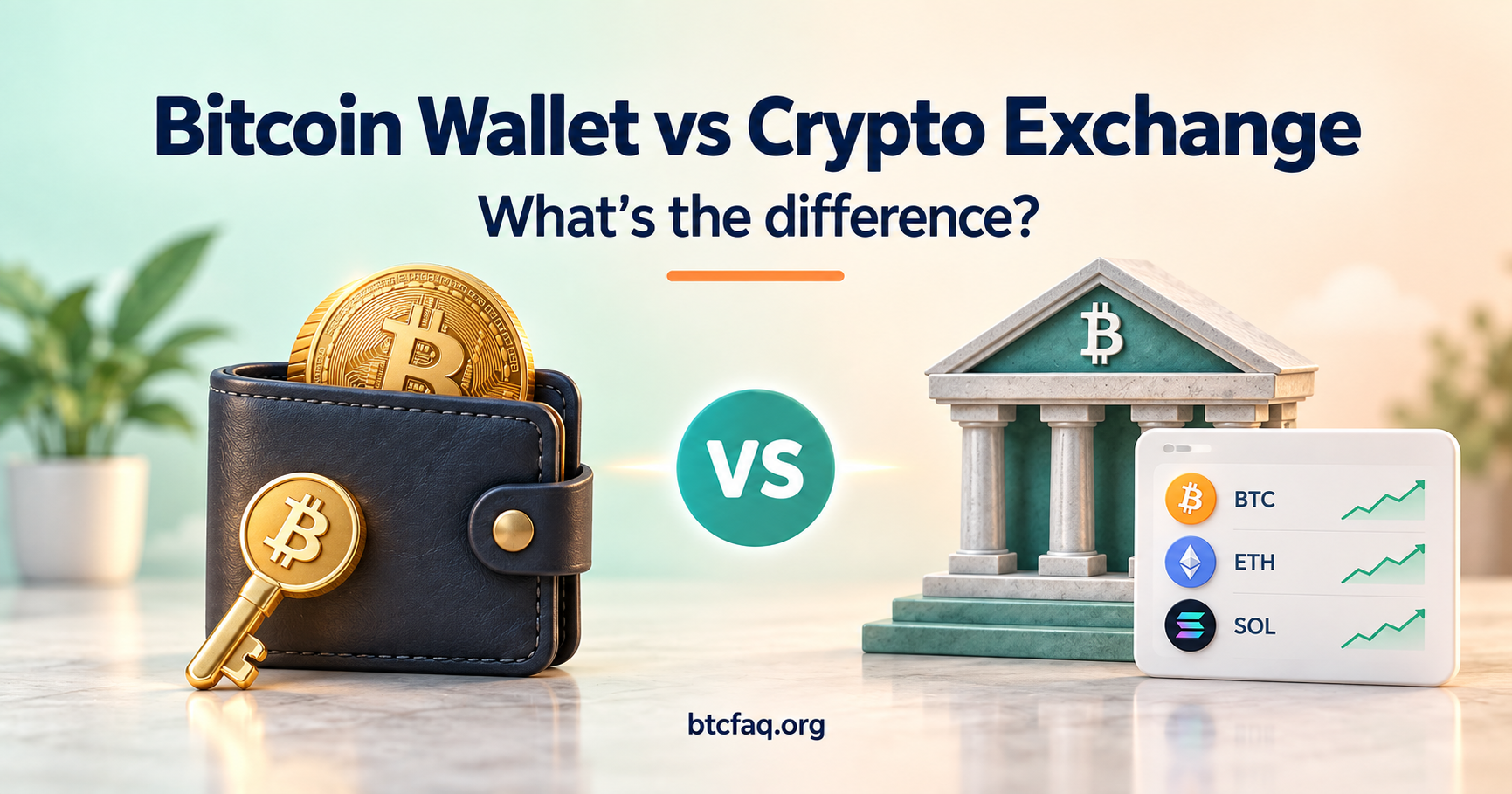
A lot of beginners use "wallet" and "exchange account" interchangeably, as if they're just two names for the same thing: a place where your crypto lives. They're not. A wallet and an exchange serve genuinely different purposes, come with different tradeoffs, and understanding the difference is one of the most practical things you can learn before you buy your first Bitcoin.
What Is a Crypto Exchange?
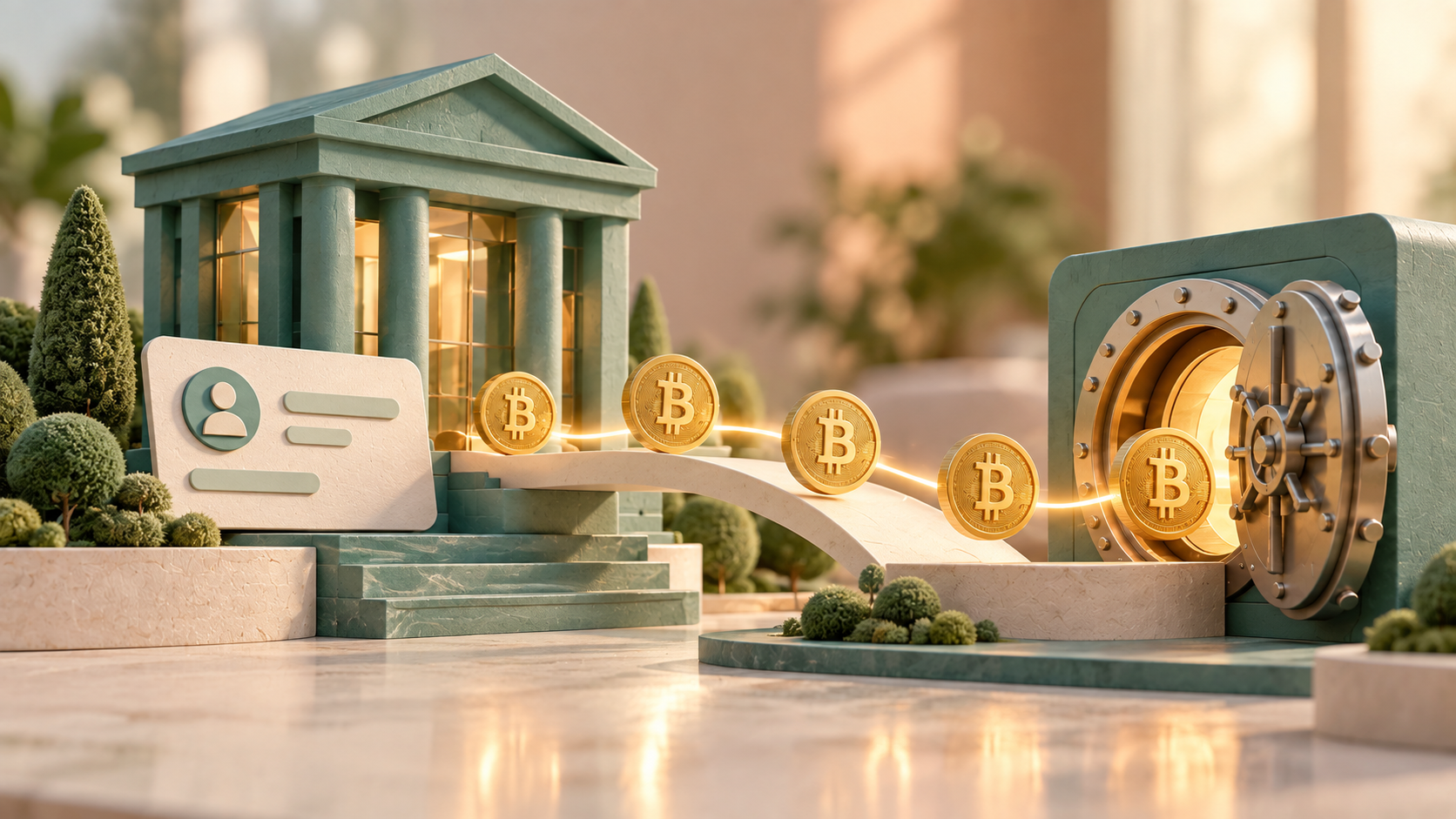
A crypto exchange is a platform designed primarily for buying, selling, and trading cryptocurrency — think of it as similar to a brokerage account. You create an account, verify your identity, deposit funds, and place orders to buy or sell Bitcoin and other assets at market prices.
By default, most exchanges are custodial, meaning the exchange itself holds the private keys to the Bitcoin in your account, not you. Your login credentials give you access to your balance and let you initiate trades or withdrawals, but the underlying keys — and therefore direct control of the funds — sit with the exchange.
What Is a Bitcoin Wallet?
A Bitcoin wallet is a tool for managing the cryptographic keys needed to receive and spend Bitcoin. It does not physically contain coins. Instead, Bitcoin remains recorded on the blockchain, while the wallet manages the credentials needed to create valid transactions spending the Bitcoin controlled by those keys.
Modern wallets commonly manage multiple private keys, public keys, and receiving addresses, often derived from a single recovery seed. A Bitcoin address can be shared when you want to receive a payment, while the private keys must remain secret because they are used to authorize spending.
Many standalone Bitcoin wallets are self-custodial, meaning the user controls the keys rather than an exchange or another custodian. However, wallet setups can vary: some use multisignature arrangements, collaborative custody, or other recovery structures, so "wallet" does not automatically mean one person holds one private key.
The Core Difference: Who Controls the Keys?
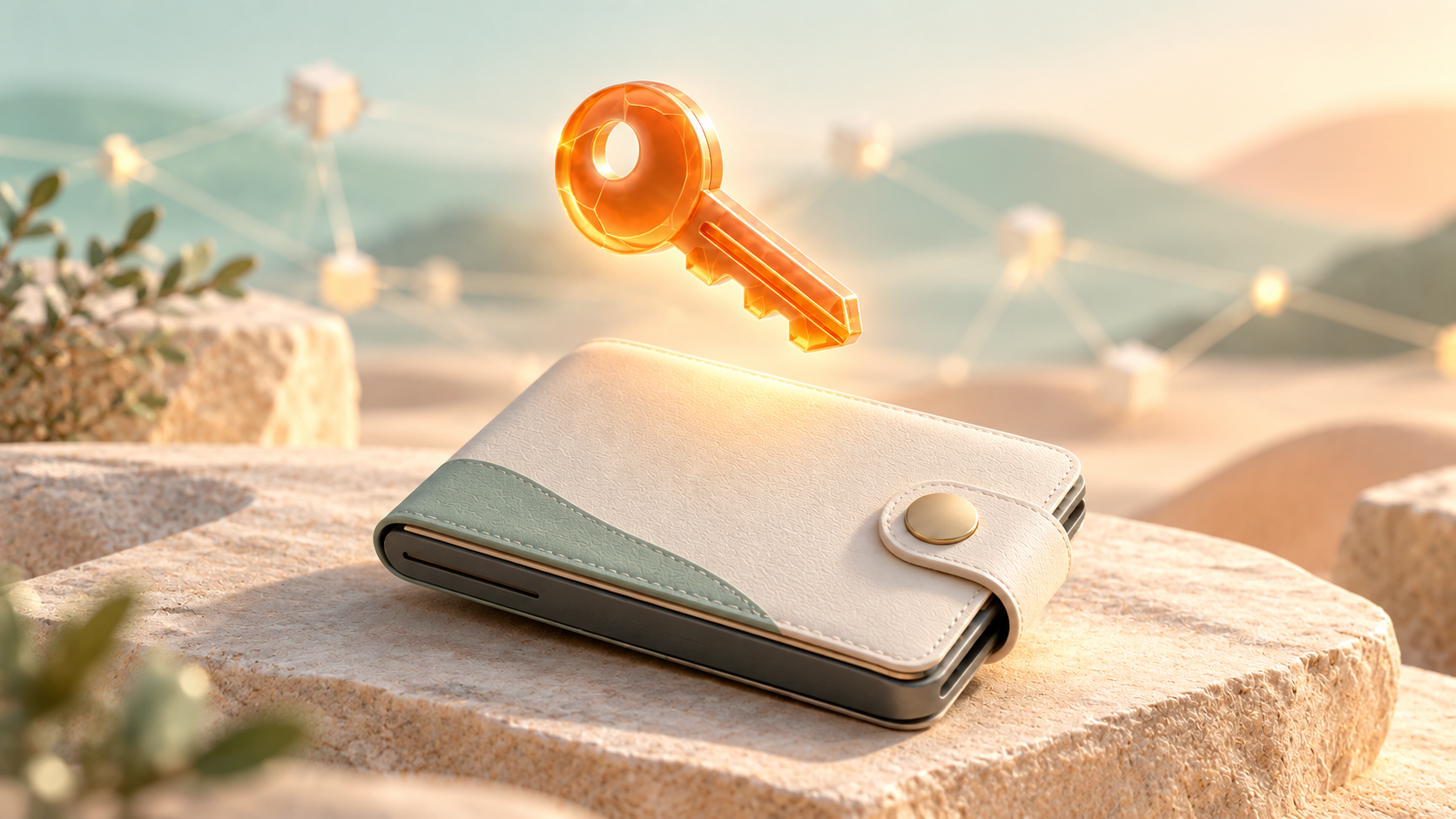
The most important distinction is custody. With a custodial exchange account, the platform controls the signing infrastructure used to move the underlying Bitcoin, while you access your account through the exchange's system. With a self-custody wallet, you control the credentials needed to authorize transactions yourself.
This is the idea behind the phrase "not your keys, not your coins." It is a reminder that exchange custody and self-custody create different responsibilities and risks rather than an argument that one setup is automatically right for every user.
Some exchanges publish proof-of-reserves reports or other financial disclosures intended to provide information about assets held by the custodian. Those should not be confused with proving control of an individual self-custodied wallet.
For people who need documentation of Bitcoin or other cryptocurrency held in their own wallet, OneMiners' Crypto Proof of Holdings Certificate serves a different purpose. It documents blockchain holdings for a specified wallet address and, at higher verification levels, can include evidence that the applicant controls that wallet. OneMiners explicitly states that the certificate cannot verify assets held inside an exchange account and is not an audit or assurance engagement.
The Case for Using an Exchange
Exchanges solve an important problem: converting regular currency into Bitcoin and Bitcoin back into fiat. Although some wallet apps now integrate third-party purchasing services, the actual fiat-to-Bitcoin conversion is typically provided by an exchange, broker, or payment partner rather than by Bitcoin's wallet functionality itself. Exchanges offer:
- A fiat on-ramp and off-ramp — the ability to convert dollars (or other currencies) into Bitcoin and back.
- Trading functionality — buying, selling, and often trading between different cryptocurrencies.
- Simplicity for beginners — a familiar, account-based experience with customer support if something goes wrong.
- Recoverable access — if you forget your password, there's a support process to regain access, unlike a lost private key.
The tradeoff is custodial risk: your funds are only as safe as the exchange's security practices and financial solvency, and your access can be limited by that platform's policies, including account freezes or withdrawal limits.
The Case for Using a Wallet
A self-custody wallet gives you direct control over the credentials needed to spend your Bitcoin rather than requiring an exchange to authorize withdrawals on your behalf. The main benefits include:
- Control over your keys — a custodian does not control whether you can sign and broadcast a transaction.
- Reduced custodian counterparty risk — your Bitcoin is not dependent on an exchange remaining solvent or continuing to honor withdrawals.
- Portability — access to your Bitcoin is tied to the wallet's keys and recovery setup rather than to an account with one particular exchange.
The tradeoff is greater personal responsibility. Losing a phone or hardware wallet does not necessarily mean losing the Bitcoin if appropriate backups exist, but permanently losing the keys and every valid recovery method can make the funds inaccessible. Self-custody therefore requires careful backup and recovery planning.
So Which One Should You Actually Use?
A wallet and an exchange solve different problems, so the right setup depends on what you need to do.
An exchange is useful when you need to convert regular currency into Bitcoin, sell Bitcoin for fiat, or actively trade. A self-custody wallet is useful when you want to control the keys yourself rather than rely on a custodian.
Some people use both: an exchange for buying or selling and a separate wallet for Bitcoin they want to self-custody. Others may use only one depending on their needs, experience, transaction frequency, and comfort with managing recovery information.
The important point is to understand who controls the keys at each stage and what responsibilities come with that choice.
Keeping Either Option Secure
Security matters whether you use an exchange or a self-custody wallet, but the risks are different.
For a self-custody wallet, protect the recovery information that can reconstruct your keys. Keep recovery phrases private and securely backed up, verify destination addresses before signing transactions, and consider dedicated signing hardware for Bitcoin that you do not need to access frequently. No legitimate support representative should need your seed phrase or private key.
For an exchange account, use a strong unique password, enable the strongest multi-factor authentication the platform supports, and be cautious with emails, messages, or websites asking you to log in or "verify" your account. Exchange users also depend on the custodian's operational security, solvency, and withdrawal policies.
Bitcoin.org's wallet security guidance provides additional Bitcoin-specific recommendations for backups, online services, and wallet protection.
What If You Earn Bitcoin Through Mining Instead of Buying It?
The wallet-versus-exchange question also applies to Bitcoin earned through mining. A mining pool can send payouts to an address supplied by the miner. From there, the miner can keep the Bitcoin in a self-custody wallet or transfer it to an exchange when they want to sell or trade it.
If you're interested in how those rewards are created, OneMiners' step-by-step guide to how Bitcoin mining works explains the mining process in more detail. For broader mining hardware and operational reading, Cassys' Medium writing provides additional related material.
Common Misconceptions
"My exchange account is basically the same as a wallet." It functions like one from a user-experience standpoint, but the exchange — not you — holds the private keys. That distinction matters most in exactly the moments you'd want it to matter least: platform outages, account freezes, or security incidents.
"I need a wallet before I can buy Bitcoin." Not necessarily. Most people start by buying on an exchange and only set up their own wallet afterward, once they're ready to take direct custody of some or all of their holdings.
"Non-custodial wallets are only for advanced users." Modern wallet apps have made self-custody far more approachable than it used to be. It requires more personal responsibility than an exchange account, but it isn't inherently complicated.
"If an exchange gets hacked, my self-custody wallet is automatically compromised too." Not necessarily. Bitcoin held in an independent self-custody wallet is not directly controlled by the exchange, so an exchange-side breach does not by itself give an attacker the keys needed to spend those funds. However, a breach could expose personal information or account data that attackers may use for phishing or other targeted attacks, so exchange security can still affect your broader risk.
Frequently Asked Questions
Can I use a wallet to buy Bitcoin directly, without an exchange? Some wallet apps let you initiate a Bitcoin purchase from inside the wallet, but the fiat-to-Bitcoin conversion is usually handled by an integrated exchange, broker, or payment provider. A Bitcoin wallet's core function is key management and transaction signing rather than operating a fiat market.
Is it safe to leave Bitcoin on an exchange long-term? It carries more custodial risk than self-custody, since you're relying on that platform's security and solvency. Many people choose to keep only smaller, active-use amounts on an exchange and move the rest to their own wallet.
What happens to my exchange funds if the exchange shuts down? This depends entirely on the exchange's policies, regulatory protections, and financial health at the time — outcomes have varied significantly across past exchange failures, which is part of why self-custody is often recommended for larger holdings.
Do I need both a wallet and an exchange account? No. You may use both if you need an exchange for buying or selling and a self-custody wallet for managing your own keys, but neither setup is universally required. The right combination depends on how you acquire Bitcoin, whether you trade it, and whether you want to manage custody yourself.
Which is better for beginners, a wallet or an exchange? They serve different purposes. An exchange can make buying Bitcoin with regular currency easier, while a self-custody wallet gives the user control of the keys. Beginners should understand the responsibilities and risks of each rather than assuming one is automatically better.
Final Thoughts
A wallet and an exchange are different tools solving different problems. An exchange can provide the market and payment infrastructure needed to buy, sell, or trade Bitcoin, while a self-custody wallet gives you direct control over the keys required to spend Bitcoin yourself. Understanding who controls those keys — you or a custodian — makes it much easier to evaluate the security, convenience, recovery options, and counterparty risks that come with each setup.