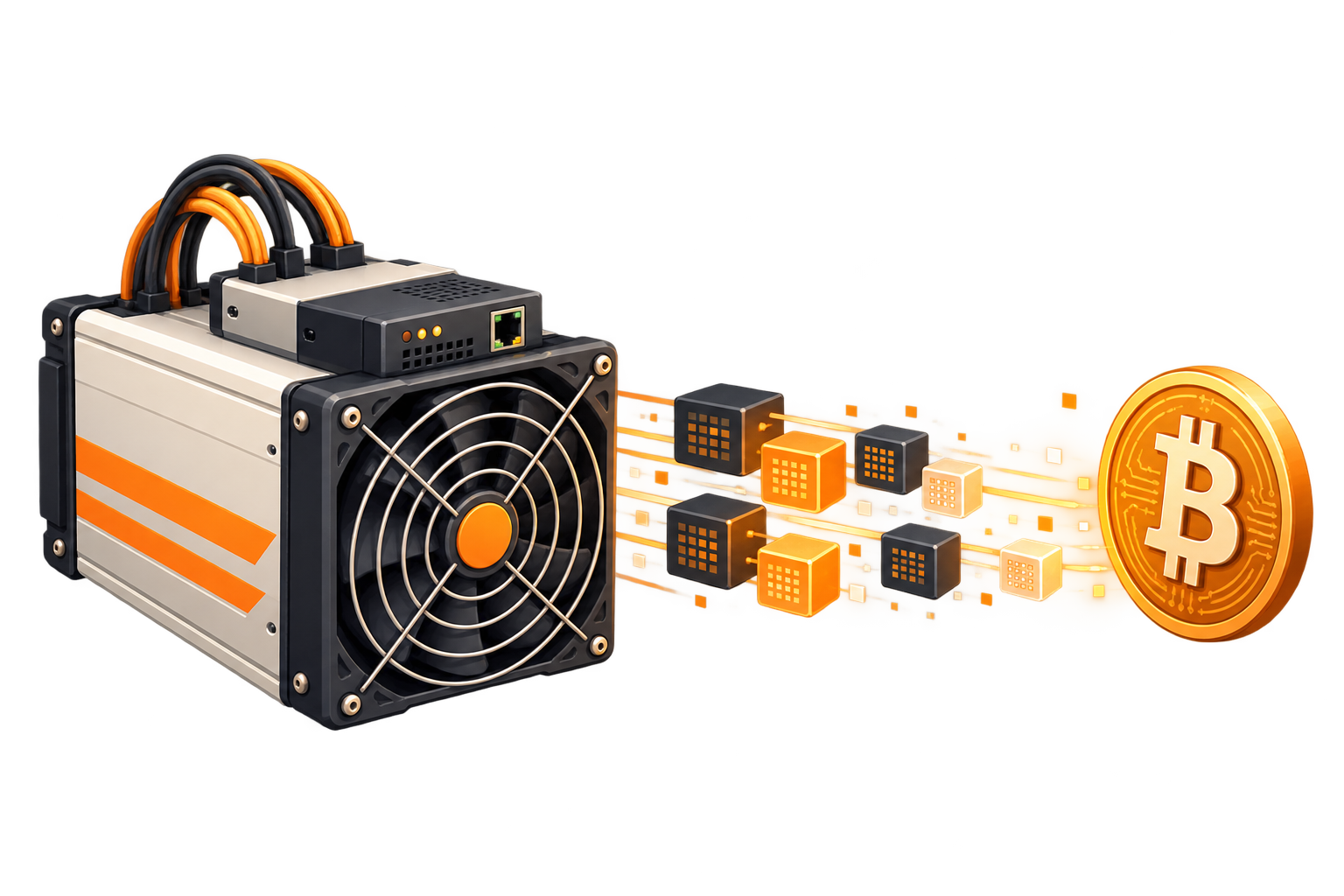
Mining is the process that lets Bitcoin add blocks of transactions without a central operator. It is often discussed through hashrate, a measure of how many guesses mining hardware can make while searching for a valid block. Hashrate is important, but it is only one part of the picture.
Hashrate is work per second
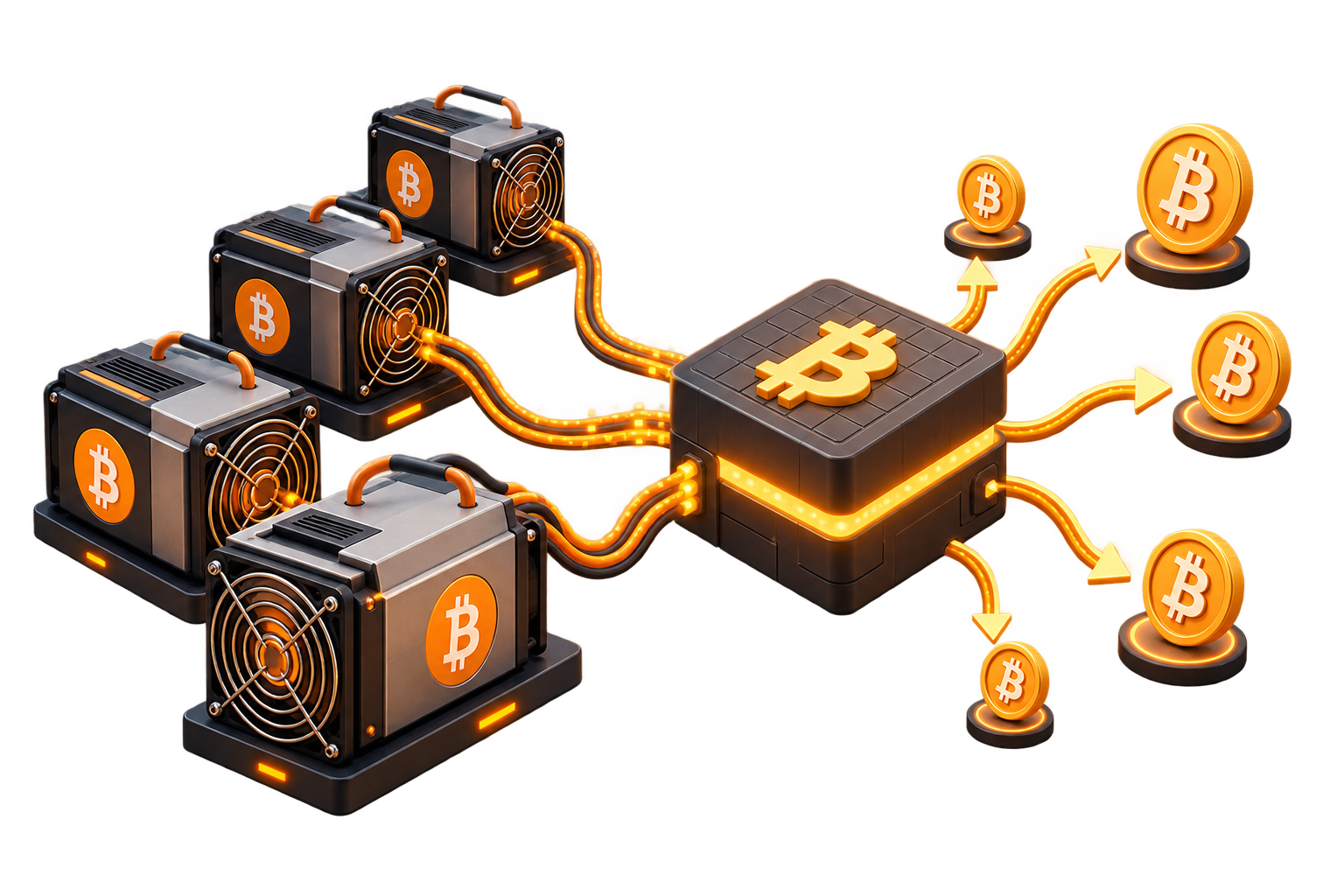
A miner repeatedly tries values until one satisfies the networks current difficulty target. More hashrate means more attempts per second. It does not mean a machine can choose which transactions become valid or change the network rules. Every block still has to be checked by other participants.
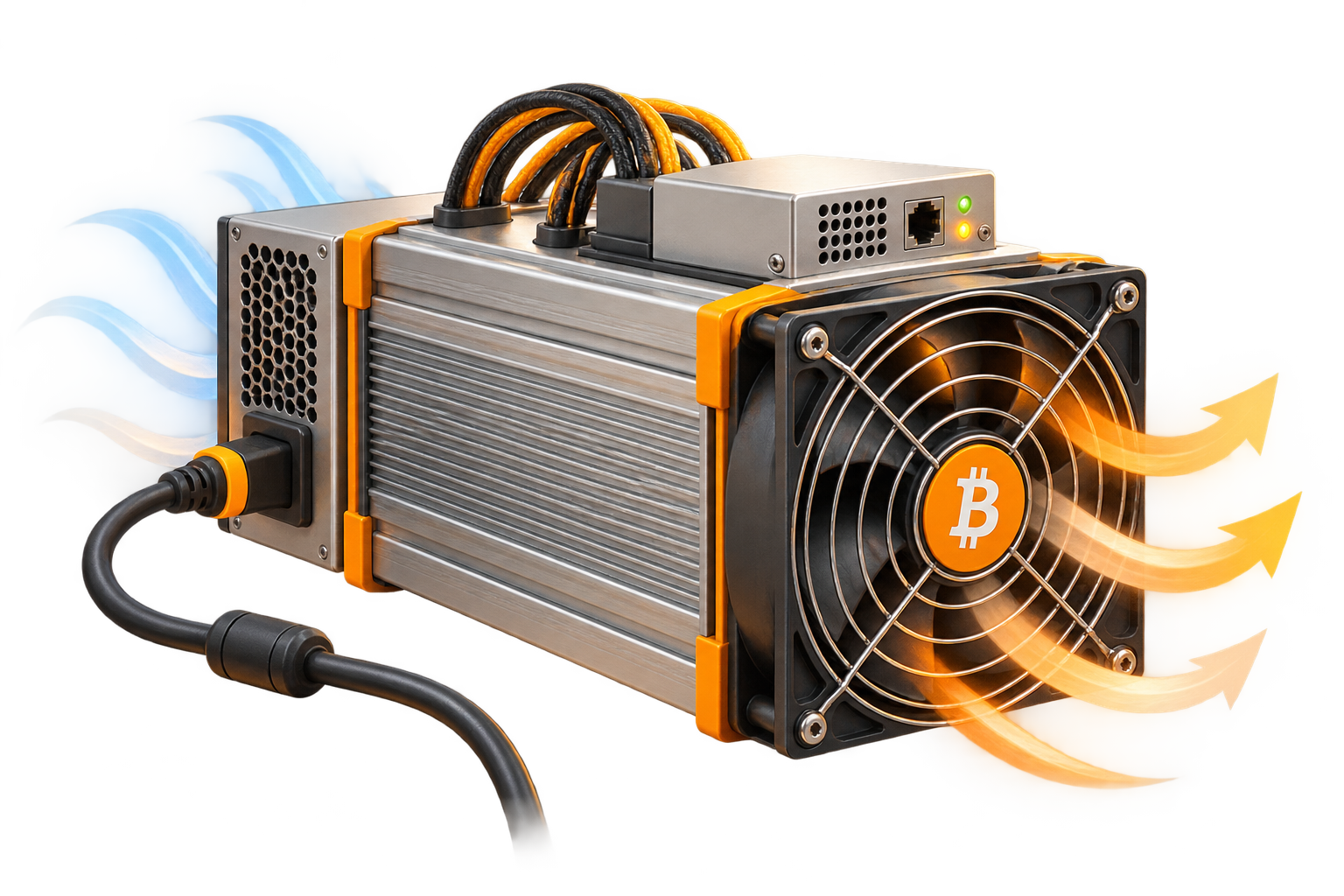
ASICs are specialized computers built for this single task. Their efficiency is usually discussed as energy used per unit of hashrate. Equipment, electricity, ventilation, noise, uptime, and pool fees all affect the practical result.
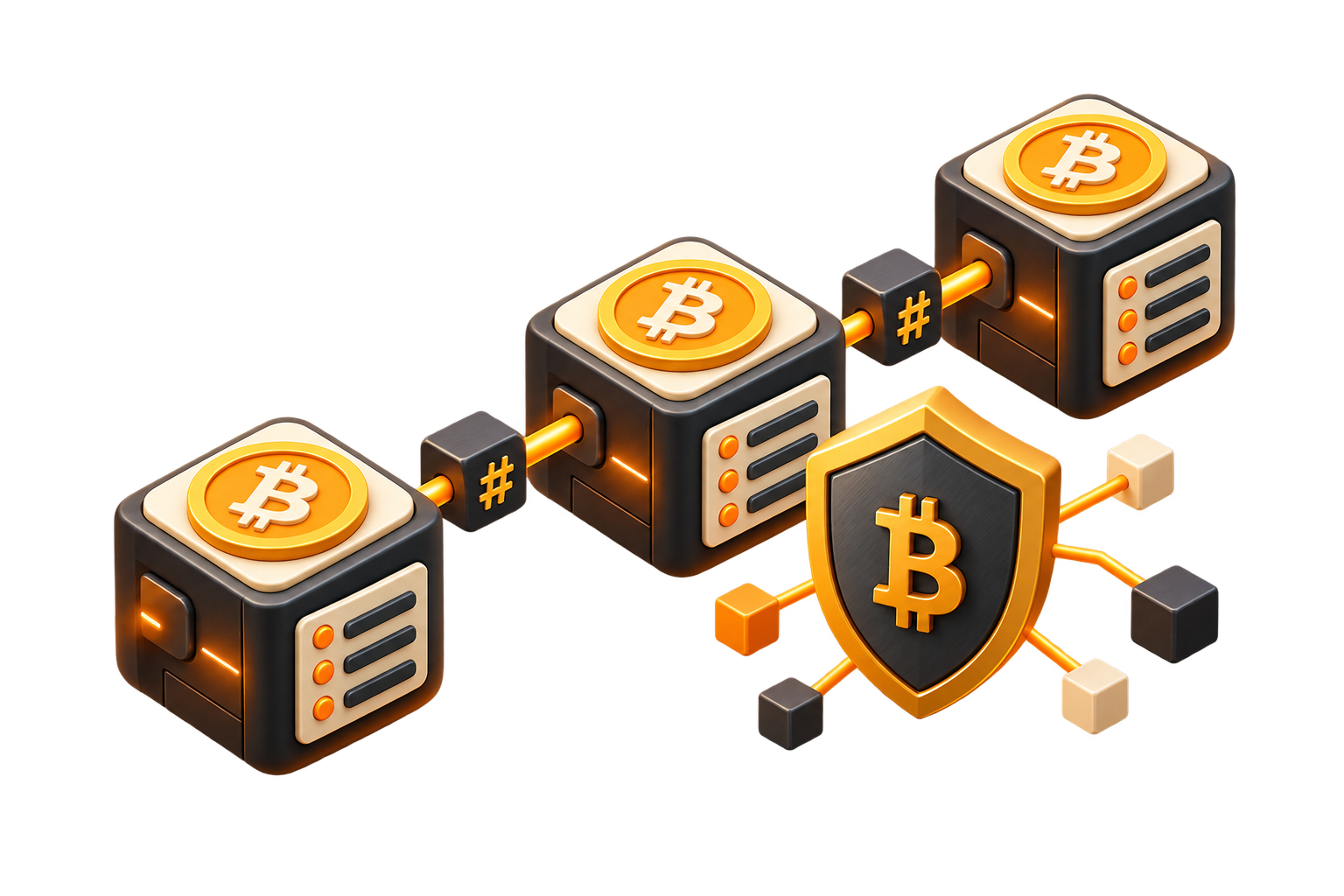
Proof of work makes history costly to rewrite
To change an older block, an attacker would need to redo its work and catch up with later blocks while the rest of the network continues forward. This cost is why mining is more than a contest for rewards. It helps make the public transaction history expensive to alter.
Difficulty adjusts over time so blocks are found at a broadly predictable pace even when the total network hashrate changes. That adjustment is automatic; it is not a forecast of a miners income.
Why miners often join pools
Finding a block can be highly variable for a single machine. A pool lets many miners contribute work and share rewards according to the pools payout rules. This can smooth the timing of payouts, but it introduces its own questions about fees, payout method, and operator trust.
Before considering any setup, calculate with conservative assumptions and include every operating cost. Mining estimates can change quickly with bitcoin price, network difficulty, fees, and energy rates. This article is educational and not an investment recommendation.